



What's Happening?
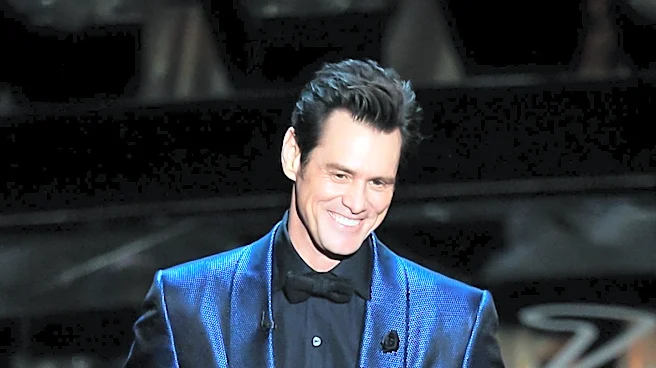
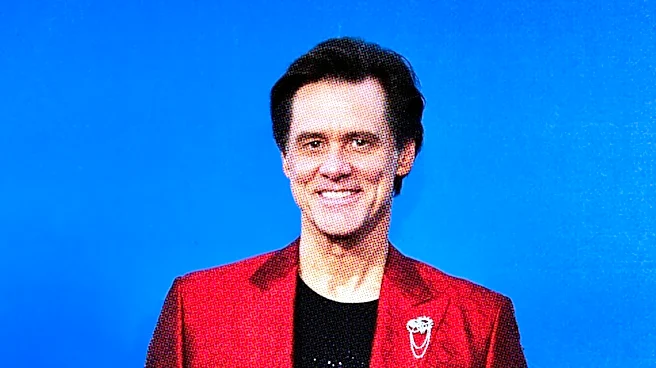
Jim Carrey was cast as The Riddler in the 1995 film 'Batman Forever' after director Joel Schumacher saw the trailer for Carrey's movie 'The Mask.' Initially, Schumacher believed Carrey was too young for the role. However, the success of 'The Mask,' along
with 'Ace Ventura: Pet Detective' and 'Dumb and Dumber' in 1994, propelled Carrey to prominence as a comedic actor. Schumacher's vision for 'Batman Forever' was influenced by the campier 1960s Batman TV show, leading him to seek a comic actor for the Riddler. Carrey's performance in 'The Mask,' which showcased his ability to embody a menacing yet silly character, convinced Schumacher to change his mind. Carrey's portrayal of Edward Nygma in 'Batman Forever' was noted for its over-the-top nature, which some, including co-star Tommy Lee Jones, found grating.
Why It's Important?
The casting of Jim Carrey as The Riddler in 'Batman Forever' was a pivotal moment for the film and the Batman franchise in the 1990s. It demonstrated the growing trend of incorporating major comedic stars into superhero films, aiming to attract a broader audience. Carrey's immense popularity at the time brought significant star power to the movie, contributing to its commercial success. This decision also highlighted a shift in the portrayal of Batman villains, moving towards more theatrical and less overtly dark interpretations, aligning with Schumacher's campier vision for the Caped Crusader. The film's approach, influenced by Carrey's comedic style, set a precedent for how future superhero adaptations might balance action with humor, impacting subsequent casting choices and directorial styles within the genre. The film's reception, including the polarizing nature of Carrey's performance, also sparked discussions about the appropriate tone for superhero narratives.
What's Next?
The legacy of Jim Carrey's Riddler in 'Batman Forever' continues to be a point of discussion among fans and critics, influencing how the character is perceived and adapted in future iterations. While 'Batman Forever' represented a specific era of superhero filmmaking, the impact of casting major comedic talent in villainous roles remains relevant. Future Batman films, such as 'The Batman,' have since explored darker and more serious interpretations of The Riddler, moving away from the campy style of the 1990s. However, the commercial success of 'Batman Forever' with Carrey's involvement demonstrated the appeal of star-driven superhero movies. This historical casting decision continues to inform discussions about balancing artistic vision with commercial viability in blockbuster productions, particularly within the ever-evolving superhero genre.
Beyond the Headlines
The decision to cast Jim Carrey as The Riddler in 'Batman Forever' reflects a broader cultural moment in the mid-1990s, where comedic actors were increasingly crossing over into mainstream action and superhero films. This trend was driven by the desire to capitalize on popular comedic talent to boost box office appeal. Carrey's performance, while divisive, showcased the potential for actors to bring unique interpretations to established comic book characters, even if it meant straying from traditional portrayals. The film's camp aesthetic, influenced by the 1960s TV series, also highlights the cyclical nature of popular culture, where past styles are reinterpreted for contemporary audiences. The behind-the-scenes dynamic, such as Tommy Lee Jones's reported discomfort with Carrey's 'buffoonery,' also offers insight into the challenges of creative collaboration when actors have vastly different approaches to their craft, underscoring the complexities of film production beyond the final cut.