




What's Happening?
The transport of a massive heat recovery steam generator from the former Pixelle/International Paper mill in Jay to Turner Island in South Portland, Maine, is underway but is taking longer than initially expected. The equipment, being moved by Barnhart
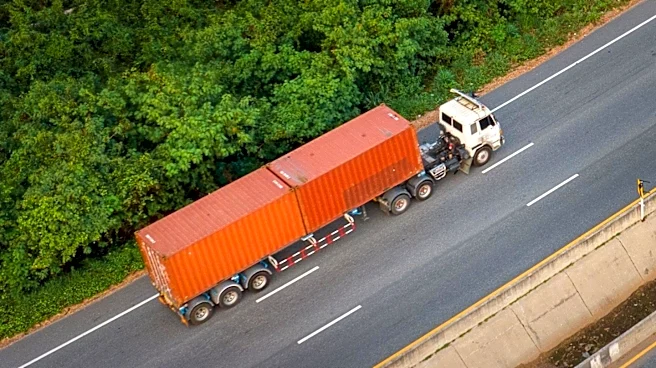
Crane & Rigging, is over 219 feet long, 20 feet wide, 19.5 feet high, and weighs 683,530 pounds. Due to its immense size, the load and its support team occupy most, if not all, of the road in several areas, requiring both a pulling and a pushing tractor. On Wednesday morning, the transport reached Turner, with plans to move over Streaked Mountain on Wednesday night. This movement caused significant traffic delays and temporary road closures, particularly at the intersection of Route 4 and Route 117, where Route 117 was closed from Weston Road to East Hebron Road from approximately 6:00 PM until midnight. The convoy is expected to reach Oxford by Thursday morning, then proceed to Gray by Friday morning, where it will be staged until Sunday night. The final leg of the journey from Gray to Buxton and then to South Portland is scheduled for overnight Monday into Tuesday. This is the first of nine such oversized loads that will travel the same route, with the schedule for subsequent transports to be determined after the first delivery is complete.
Why It's Important?
This large-scale transport operation is important for several reasons. Economically, it represents the repurposing or relocation of industrial assets, potentially signaling changes in manufacturing or energy infrastructure. The equipment, once delivered to South Portland, will be hoisted onto barges and sent to paper mills in Alabama, Virginia, and Louisiana, indicating an interstate industrial supply chain. However, the transport significantly impacts local communities along its 90-mile route through towns like Turner, Buckfield, Paris, Norway, Oxford, Poland, Gray, Windham, and Scarborough. The extensive road closures and traffic delays disrupt daily commutes, local commerce, and emergency services, requiring careful coordination and public awareness. The logistical challenges of moving such an enormous load highlight the complexities of industrial infrastructure projects and their ripple effects on local populations and transportation networks. The fact that eight more such transports are planned means these disruptions will be recurring, necessitating ongoing public communication and traffic management strategies.
What's Next?
The transport convoy will continue its journey through Maine, with specific overnight movements planned to minimize daytime traffic impact. Residents and commuters in the affected towns should anticipate ongoing traffic delays and temporary road closures along Route 4, Route 117, Route 26, Route 202, Route 22, Route 1, and Broadway to Elm Street. Local authorities and the transport company will likely continue to issue advisories regarding specific timings and alternative routes. Once this first generator reaches South Portland, the schedule for the remaining eight oversized loads will be finalized and announced. This means that the communities along the route will experience similar disruptions in the coming weeks or months. The successful completion of these transports is crucial for the industrial facilities awaiting the equipment, and for the company responsible for the move. Public patience and cooperation with traffic management will be essential throughout this extended operation.
Beyond the Headlines
The movement of this massive industrial equipment through Maine highlights the often-unseen logistical backbone of the nation's industrial economy. While the immediate focus is on traffic disruptions, this operation is a testament to the specialized engineering and coordination required for such large-scale projects. It also subtly points to the evolving landscape of industrial infrastructure, where components are manufactured in one location and transported across states for assembly or use in other industries, such as paper manufacturing. The reliance on specific routes and the need for extensive road closures underscore the limitations of existing infrastructure for accommodating modern industrial demands. This situation could prompt discussions about infrastructure upgrades or alternative transport methods for future large-scale movements. Furthermore, the repurposing of equipment from a former mill in Jay to other states reflects the dynamic nature of industrial sectors, with assets being reallocated to meet demand elsewhere, impacting local economies both at the point of origin and destination.