






What's Happening?
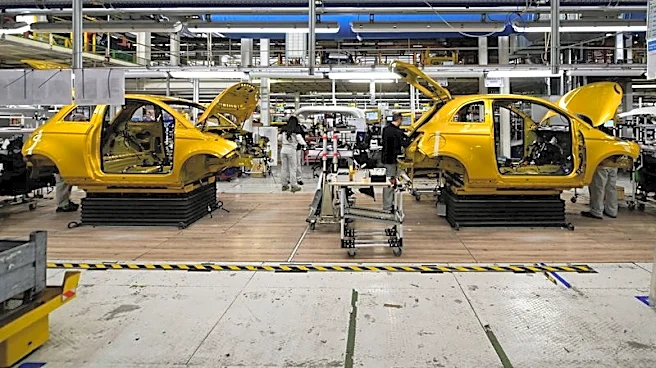
Stellantis is implementing additional manufacturing shutdowns across its European assembly plants in the coming weeks due to sluggish market demand and intensifying industry competition. According to Bloomberg, citing a media representative, operations
at Stellantis' Mulhouse facility in France, which produces the Peugeot 308 compact family car, will be suspended for several days in December and again from December 23 to January 11. Production of the Citroën C5 Aircross at Rennes will also cease from the evening of December 18 until January 5, with a potential extension. Additionally, approximately 500 temporary positions at the Sochaux factory are slated for elimination starting in January, attributed to a 'challenging environment marked by the emergence of new, aggressive competition.' These actions follow previous output halts at multiple European assembly locations in October, which were primarily due to component shortages at Italian facilities like Pomigliano and Mirafiori, where electric and hybrid Fiat 500 models are manufactured. Stellantis Europe head Emanuele Cappellano highlighted escalating financial burdens on regional production, including a 'dramatic' surge in factory power bills, import competition, and electrification costs, making the continuity of Italian production a daily challenge.
Why It's Important?
The decision by Stellantis to implement further factory halts in Europe underscores the significant challenges facing the automotive industry, particularly in the context of rising competition and economic pressures. The elimination of temporary positions and production suspensions indicate a strategic response to mitigate excess manufacturing capacity and curb spending amidst elevated semiconductor and raw-material costs. This move reflects a broader trend where established automakers are grappling with a 'challenging environment' characterized by new, aggressive competition, particularly from Chinese manufacturers like Leapmotor, which is also a partner of Stellantis. The escalating financial burdens, including increased factory power bills and electrification costs, are making European production increasingly difficult to sustain. The company's strategy to expand ties with partners like Leapmotor and Dongfeng Motor to mitigate excess capacity without permanent plant closures suggests a shift towards collaborative models to lower costs, raise utilization, accelerate electric vehicle output, and reduce investment needs. This could set a precedent for other European carmakers facing similar pressures, potentially leading to more partnerships and shared resources within the industry.
What's Next?
Stellantis is expected to continue navigating a challenging market environment marked by intense competition and cost pressures. The company's chief executive, Antonio Filosa, faces mounting pressure to introduce new products, enhance quality, and control spending. The expansion of ties with partners like Leapmotor and Dongfeng Motor is a key strategy to address excess European manufacturing capacity and reduce costs. This collaboration could lead to more shared factories, platforms, supply chains, and technology among carmakers, particularly in the electric vehicle sector. Further cost-reduction measures are also anticipated, as evidenced by Stellantis' recent decision to abandon several European racing programs. The ongoing negotiations regarding its Canadian industrial footprint, including the future of its Brampton Assembly Plant, indicate that the company is evaluating its global manufacturing operations to optimize efficiency and profitability. The industry will be closely watching how these strategic adjustments impact Stellantis' market position and its ability to compete effectively against emerging rivals and economic headwinds.
Beyond the Headlines
The factory halts and job reductions at Stellantis highlight a deeper structural shift within the global automotive industry, driven by the rapid rise of electric vehicles and intense competition from new players, particularly from China. The 'dramatic' surge in factory power bills and electrification costs mentioned by Stellantis Europe head Emanuele Cappellano points to the significant financial burden associated with the transition to electric vehicles, which is impacting traditional automakers. The strategy of expanding ties with Chinese manufacturers like Leapmotor, even as they pose a competitive threat, suggests a complex interplay of collaboration and rivalry. This could lead to a more integrated global automotive supply chain, where European carmakers increasingly rely on Chinese technology and manufacturing capabilities to remain competitive. The ethical implications of job reductions and the potential impact on local economies in Europe will also be a critical consideration. This trend could reshape the landscape of automotive manufacturing, leading to a more consolidated and globally interconnected industry, but also raising questions about national industrial sovereignty and employment.