







What's Happening?
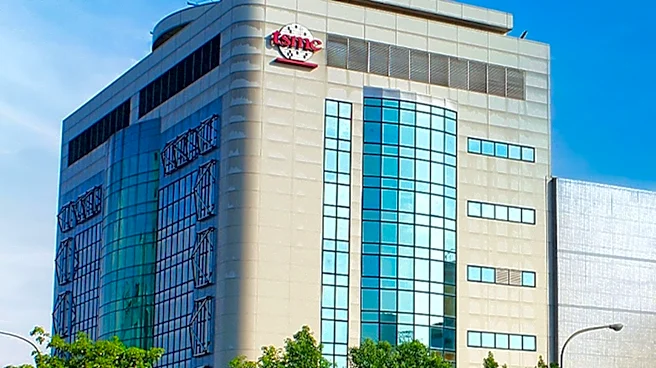
Taiwan Semiconductor Manufacturing Company (TSMC) has announced a significant increase in its capital expenditure and revenue forecast for the year, driven by the growing demand for AI chips and data centers. The company reported a record second-quarter
revenue of $40.2 billion and has raised its capital spending outlook to between $60 billion and $64 billion for 2026, which is at least $4 billion higher than previously forecasted. TSMC, a primary chip supplier for Nvidia, also plans an additional $100 billion investment in Arizona. Despite these positive developments, TSMC's US-listed shares fell as investors took profits, although the stock has risen over 36% year-to-date.
Why It's Important?
TSMC's increased capital expenditure and revenue forecast highlight the robust demand for AI chips, which are crucial for data centers and advanced computing applications. This move underscores the semiconductor industry's pivotal role in supporting AI advancements, which are expected to drive significant economic growth. The company's investment in Arizona also reflects a strategic shift towards expanding manufacturing capabilities in the U.S., potentially reducing reliance on Asian supply chains. However, the stock's decline despite strong financial performance suggests investor caution regarding the sustainability of AI-driven growth and rising component prices.
What's Next?
TSMC's future actions will likely focus on expanding its manufacturing footprint in the U.S. and addressing challenges related to rising component prices and macroeconomic uncertainties. The company's increased capital expenditure signals a long-term commitment to meeting the growing demand for AI chips. Investors and industry stakeholders will closely monitor TSMC's ability to maintain its growth trajectory and manage costs effectively. Additionally, the broader semiconductor industry may see increased competition as other companies ramp up their investments in AI and data center technologies.