






What's Happening?
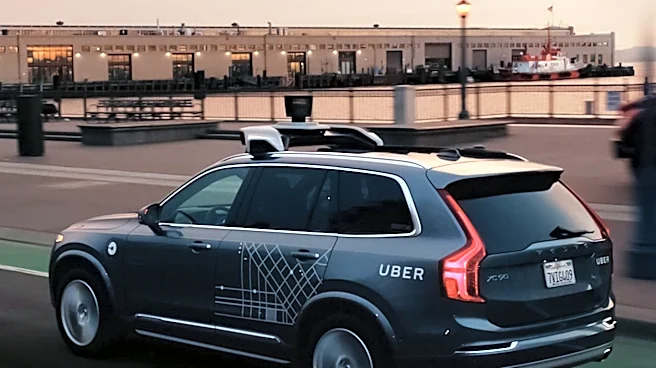
Uber's ambitious plans to scale its robotaxi services in partnership with Nuro and Lucid are facing significant challenges. The program, which is a 'must-win' project for Lucid, is unlikely to achieve paid commercial service in California by year-end
due to regulatory hurdles. A potential pivot to Texas is being considered. Meanwhile, Uber's stock has been affected by a 'Waymo hangover,' as the company struggles to match Waymo's lead in autonomous vehicle deployment. The $10 billion Uber has committed to autonomous vehicle investments is expected to take years to materialize into meaningful scale.
Why It's Important?
Uber's challenges highlight the complexities of scaling autonomous vehicle services in the U.S., where regulatory environments vary significantly by state. The delay in achieving commercial service could impact Uber's financial performance and investor confidence. The situation underscores the importance of regulatory strategy in the autonomous vehicle industry, as companies must navigate a patchwork of state and federal regulations. Success in this area could position Uber as a leader in the future of urban transportation, but failure could leave it trailing behind competitors like Waymo.
What's Next?
Uber may need to adjust its strategy to focus on markets with more favorable regulatory environments, such as Texas. The company will also need to continue investing in technology development and partnerships to remain competitive. Stakeholders will be watching for any regulatory changes that could impact the timeline for commercial deployment. Additionally, Uber's ability to manage investor expectations and communicate its long-term vision will be crucial in maintaining market confidence.