


What's Happening?
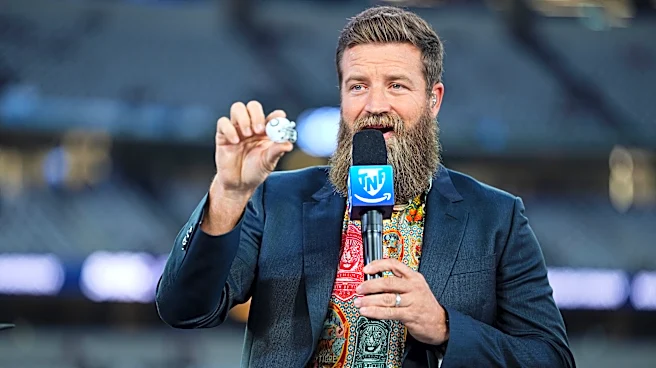
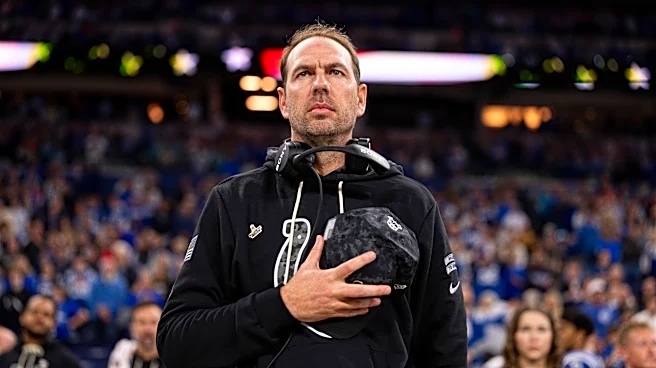
Former Kansas City Chiefs player Mitch Schwartz attempted to defend Indianapolis Colts owner Carlie Irsay-Gordon against fan criticism by comparing her sideline presence to that of former Dallas Mavericks majority owner Mark Cuban. Irsay-Gordon has been
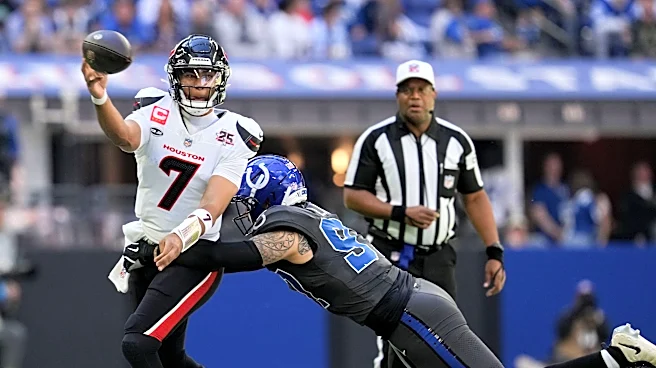
a frequent topic of discussion during the 2026-27 NFL season due to her repeated appearances on the sidelines, notably taking notes during the Colts' 26-3 defeat against the Houston Texans. Fans criticized her actions as performative and micro-managing. Schwartz expressed surprise at the backlash Irsay-Gordon received, suggesting it was similar to how Cuban was often seen on the sidelines. However, this comparison quickly drew counter-arguments from fans who differentiated Cuban's behavior, describing it as that of a passionate fan, from Irsay-Gordon's, which they perceived as intrusive and performative, such as attempting to involve herself in huddles or timeouts.
Why It's Important?
This incident highlights the differing expectations and perceptions fans have regarding owner involvement in professional sports teams, particularly in the NFL. The debate surrounding Carlie Irsay-Gordon's sideline conduct and Mitch Schwartz's defense of her underscores the fine line between passionate ownership and perceived interference. For team owners, it illustrates the scrutiny they face and the potential for their actions to either galvanize or alienate a fanbase. The comparison to Mark Cuban, a well-known and often vocal owner, further emphasizes that while visibility can be a positive, the nature of that visibility is critical. This discussion also touches on broader issues of gender in sports leadership, as some fans suggested the criticism Irsay-Gordon faces might be partly due to her gender, adding another layer of complexity to the public discourse around her role and actions.
What's Next?
Carlie Irsay-Gordon may need to re-evaluate her approach to sideline presence given the ongoing negative reaction from the Indianapolis Colts fanbase. The continued criticism suggests that her current actions are not resonating positively with supporters, potentially creating a distraction for the team and its public image. While every NFL owner has a unique style, the strong fan sentiment indicates that Irsay-Gordon's current method is counterproductive to fostering support. Future games will likely see continued scrutiny of her sideline behavior, and any changes in her approach could be interpreted as a response to fan feedback. The broader conversation about owner involvement in sports is likely to continue, with other owners potentially observing this situation to gauge how their own public interactions are perceived by their respective fan bases.