
What's Happening?
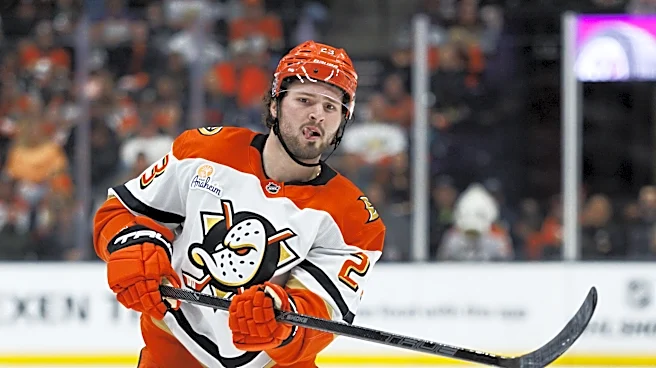
Leo Carlsson, a 21-year-old forward and restricted free agent (RFA) from the Anaheim Ducks, has received a significant offer sheet from the Philadelphia Flyers. The offer, valued at $90 million over five
years, was made public on July 3. According to NHL insider Elliotte Friedman, the Ducks had been in negotiations with Carlsson's representatives, proposing a contract between $12-$13 million annually. Under the NHL collective bargaining agreement, the Ducks have until July 10 to match the Flyers' offer. If they choose not to, they will receive four first-round draft picks as compensation. Carlsson, who was drafted by the Ducks as the No. 2 pick in 2023, has shown remarkable performance, helping the team reach the Stanley Cup Playoffs in the 2025-26 season.
Why It's Important?
This development is significant for several reasons. Firstly, it highlights the competitive nature of NHL contract negotiations, especially for young talents like Carlsson. The offer from the Flyers, if accepted, would make Carlsson the highest-paid player in the NHL, surpassing Kirill Kaprizov's $17 million annual contract. This move could set a new benchmark for player salaries in the league, potentially influencing future negotiations for other players. For the Ducks, the decision to match the offer or accept the draft picks will impact their team strategy and financial planning. The outcome will also affect the Flyers' roster and salary cap management, as they aim to strengthen their team with Carlsson's addition.
What's Next?
The Anaheim Ducks have until July 10 to decide whether to match the Flyers' offer. If they choose to match, Carlsson will remain with the Ducks under the new contract terms. If not, he will join the Flyers, and the Ducks will receive four first-round draft picks. This decision will likely involve careful consideration of the team's long-term goals, financial constraints, and the potential impact on team dynamics. Stakeholders, including fans and analysts, will be closely watching the Ducks' decision, as it could influence future RFA negotiations and team-building strategies across the NHL.