




What's Happening?
U.S. producer prices for final demand increased by 6.5% year-over-year in October, marking the largest annual rise since November 2022, according to data released by the U.S. Bureau of Labor Statistics. This figure is up from 6.3% in September, though
it came in slightly below economists' forecast of 6.6%. On a month-over-month basis, the Producer Price Index (PPI) decelerated to 0.3% in October, compared to a revised 1.4% increase in September. This monthly slowdown was partly attributed to a 0.1% decrease in energy prices, despite a 0.5% uptick in goods prices, driven by items like food and basic organic chemicals. Services prices also continued their upward trend, rising by 0.2% for the fifth consecutive month, largely due to increased transportation and warehousing costs. Core PPI, which excludes volatile food, energy, and trade services, rose by 0.5% for the second consecutive month, exceeding market expectations.
Why It's Important?
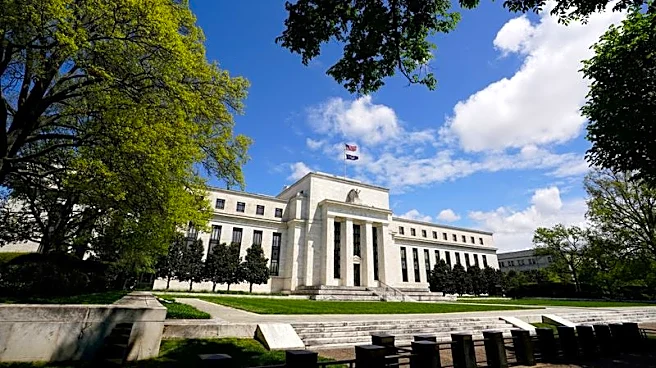
The persistent rise in producer prices, particularly the annual increase reaching a nearly four-year high, signals ongoing inflationary pressures within the U.S. economy. This data is crucial for the Federal Reserve as it considers its monetary policy decisions. Higher producer prices can eventually translate into higher consumer prices, impacting household purchasing power and overall economic stability. The fact that core PPI remains elevated suggests that inflation is not solely driven by volatile sectors like energy but is more broadly embedded in the economy. This situation strengthens the case for the Federal Reserve to continue raising interest rates, potentially by at least a quarter of a percentage point in its December meeting, to curb inflation. Such rate hikes can increase borrowing costs for businesses and consumers, potentially slowing economic growth but aiming to stabilize prices. Industries reliant on goods with substantial price increases, such as industrial chemicals, steel, and electronic components, will face higher input costs, which may be passed on to consumers or impact profit margins.
What's Next?
The latest PPI data is expected to reinforce the Federal Reserve's hawkish stance, making further interest rate hikes highly probable at its upcoming December meeting. While the monthly deceleration in the headline PPI offers some relief, the elevated annual rate and persistent core inflation suggest that the Fed will likely continue its efforts to tighten monetary policy. Investors will closely monitor upcoming economic indicators, particularly consumer price index (CPI) data, for further clues on the trajectory of inflation and the Fed's response. Businesses, especially those in manufacturing and distribution, will need to continue managing rising input costs and potentially adjust pricing strategies. The impact of these rate hikes will likely be felt across various sectors, influencing investment decisions, consumer spending, and the overall economic outlook for the coming months.
Beyond the Headlines
The uneven nature of cost pressures highlighted in the PPI report, with some categories like diesel and lumber declining while others like truck freight and industrial chemicals surge, points to a complex inflationary environment. This divergence necessitates granular cost monitoring and targeted pricing adjustments for businesses rather than broad-based changes. The continued rise in transportation and warehousing costs, partly due to diesel price fluctuations, underscores the vulnerability of supply chains to energy market volatility. Furthermore, the report's implications extend to the bond market, where expectations of further rate hikes have already weighed on short-dated Treasury bonds. The ongoing debate within the Federal Reserve regarding the pace and extent of future rate increases reflects the delicate balance between controlling inflation and avoiding an economic downturn, making each new data release a critical piece of the puzzle for policymakers and market participants alike.