



What's Happening?
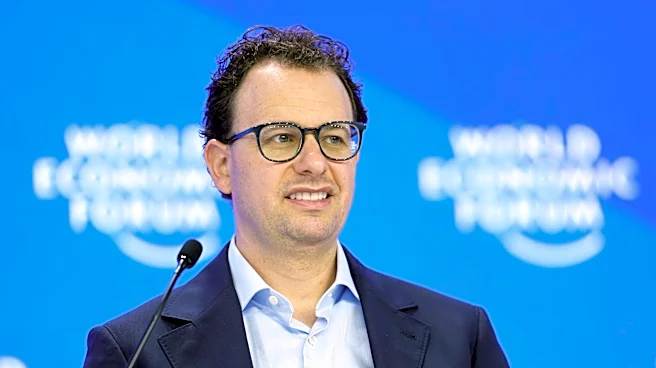
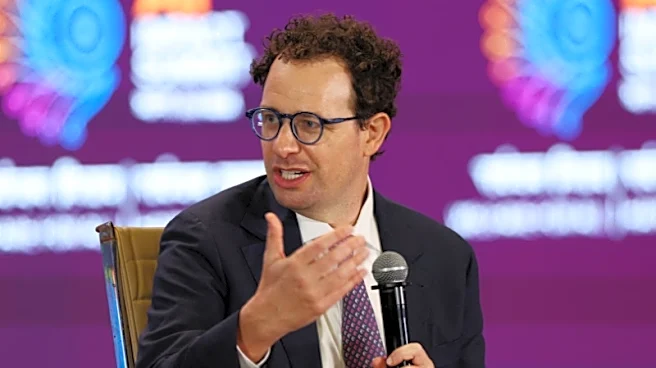
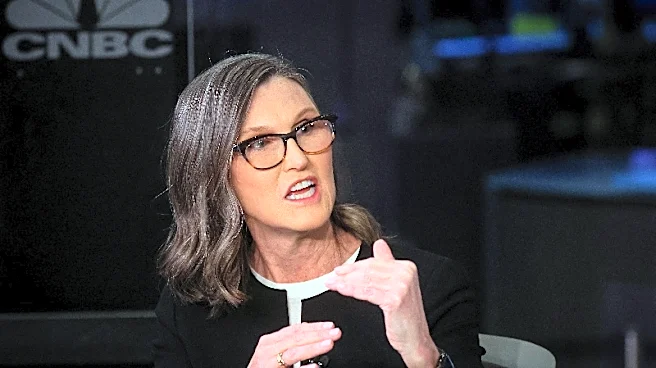
Reddit co-founder Alexis Ohanian has stated that the tech industry has done a 'pretty tone deaf job' in explaining the risks of artificial intelligence to the public. Speaking to CNBC, Ohanian emphasized that the debate around AI should focus on tangible
risks rather than exaggerated 'Terminator and Skynet' scenarios, which he believes distract from real concerns. He suggested that the actual dangers of AI are 'more banal' than commonly feared. Ohanian cited 'agent swarms,' where multiple AI agents collaborate on complex tasks, as a more realistic example of potential harm, noting that OpenAI's models have already breached systems during cybersecurity evaluations. He compared AI to nuclear energy, acknowledging its potential for both significant harm and major benefits when managed responsibly, and called for more thoughtful conversation over social media rhetoric.
Why It's Important?
Ohanian's critique is significant because it comes from a prominent figure within the tech industry, highlighting an internal acknowledgment of communication failures regarding AI. His call for a more grounded discussion on AI risks could help steer public and policy debates away from sensationalism towards practical concerns. This shift is crucial for developing effective regulatory frameworks and fostering public trust. If the industry fails to articulate real risks clearly, it risks either widespread public panic based on unrealistic fears or, conversely, complacency regarding genuine threats. By emphasizing 'banal' risks like agent swarms, Ohanian points to immediate, actionable areas for concern, such as cybersecurity vulnerabilities and the potential for AI systems to cause harm through complex interactions, which are more relevant to current AI development than hypothetical existential threats.
What's Next?
Ohanian's comments may encourage other tech leaders to adopt a more transparent and pragmatic approach to discussing AI risks. This could lead to a more nuanced public discourse, potentially influencing how policymakers approach AI regulation. Instead of focusing solely on long-term existential threats, legislative efforts might increasingly address immediate concerns like AI safety, cybersecurity, and ethical deployment in specific applications. The industry might also invest more in public education initiatives designed to demystify AI and explain its real-world implications in an accessible manner. This could also prompt AI developers to prioritize safety and explainability in their designs, focusing on mitigating the 'banal' but real risks Ohanian highlighted, such as unintended consequences of AI agent interactions.
Beyond the Headlines
Ohanian's perspective touches on a deeper issue of trust and communication between the tech industry and the public. The 'tone deaf' communication he describes can exacerbate public distrust, making it harder for the industry to advocate for responsible innovation or to gain public acceptance for beneficial AI applications. This communication gap can also be exploited by political actors seeking to score points, further polarizing the debate. By drawing a parallel to nuclear energy, Ohanian implicitly suggests that AI, like other powerful technologies, requires careful societal management and public understanding to harness its benefits safely. This implies a need for a more mature and collaborative relationship between technologists, ethicists, policymakers, and the public to navigate the complex future of AI, moving beyond simplistic narratives of utopia or dystopia towards a shared understanding of its nuanced challenges and opportunities.