
What's Happening?
Roku has initiated its Black Friday sales event, offering significant discounts on a range of its streaming products and smart televisions. Among the notable deals is a $600 reduction on the 75-inch Roku Pro
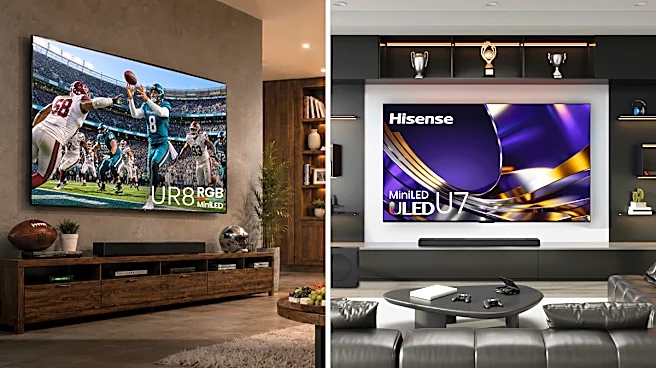
Series QLED TV, now priced at $1,099.99 at Best Buy. For consumers seeking to upgrade existing televisions, the Roku Streaming Stick Plus is available for $34 on Amazon, down from its original price of $59.99. Additionally, a 32-inch Select Series Roku TV is being offered at $99.99 at Best Buy, a substantial decrease from its regular price of $179.99. The sale also includes the full HD Roku Streaming Stick for $19, targeting users who do not require 4K resolution or prefer a simpler streaming solution. Beyond Roku-branded devices, the Black Friday promotions extend to Roku TVs manufactured by partners such as TCL, Hisense, and Philips, providing a broader selection for consumers. These deals aim to make streaming technology more accessible during the holiday shopping season.
Why It's Important?
These Black Friday deals from Roku are significant for several reasons within the U.S. consumer electronics market. Firstly, they make advanced streaming technology and smart TV capabilities more affordable, potentially increasing market penetration for Roku's ecosystem. This could lead to a broader user base for Roku's platform, which in turn benefits content providers and advertisers who utilize the platform. Secondly, the competitive pricing, especially on larger QLED models, puts pressure on rival streaming device manufacturers and smart TV brands, potentially driving down prices across the industry. This benefits consumers by offering more value for their money. Thirdly, by including partner brands like TCL and Hisense in the promotions, Roku strengthens its position as a leading operating system for smart TVs, reinforcing its ecosystem's reach and influence in the home entertainment sector. The increased adoption of Roku devices could also impact how content is consumed, shifting more viewers towards streaming services and away from traditional broadcast television.
What's Next?
Following the Black Friday sales, Roku will likely analyze the sales data to gauge consumer interest in specific product categories and price points. This data will inform future pricing strategies and product development. Competitors in the streaming device and smart TV markets are expected to respond with their own promotional activities, potentially leading to continued price wars throughout the holiday season. For consumers, the availability of affordable streaming options may accelerate the adoption of smart home entertainment systems. Retailers will also be monitoring these sales closely to adjust inventory and marketing efforts for the remainder of the holiday shopping period. The success of these Black Friday deals could also influence Roku's partnerships with TV manufacturers, potentially leading to more integrated Roku TV models in the coming year.
Beyond the Headlines
The aggressive pricing strategy employed by Roku during Black Friday reflects a broader trend in the technology sector where companies aim to expand their user base through accessible hardware, thereby monetizing through content consumption and advertising. This approach highlights the evolving business model in home entertainment, where the initial sale of hardware serves as a gateway to a more lucrative ecosystem of services. The increased affordability of smart TVs and streaming sticks also contributes to the digital divide, making advanced entertainment options more accessible to a wider demographic. Furthermore, the emphasis on integrated Roku TVs from various manufacturers underscores the importance of operating systems in the smart TV market, positioning Roku as a key player not just in hardware, but also in the software that powers millions of televisions. This strategic move could solidify Roku's long-term influence on how Americans consume media.