





What's Happening?
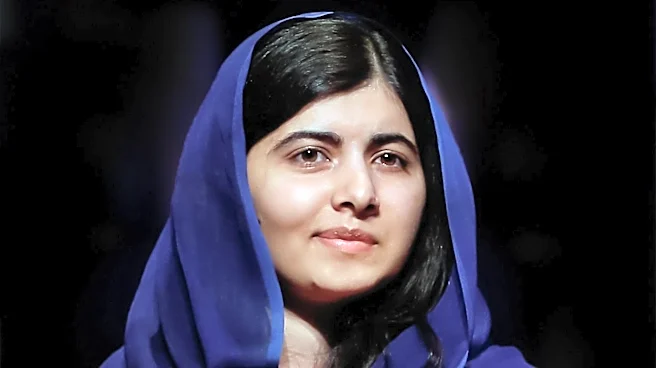
Malala Yousafzai, Nobel Peace Prize laureate and advocate for girls' education, has shared a list of six books that she recommends for exploring themes of freedom, identity, and self-discovery. These recommendations come as her latest memoir, 'Finding
My Way,' is released in paperback. Yousafzai emphasizes that freedom is often a complex process of deciding on compromises and defining oneself beyond external expectations. The books she suggests delve into various facets of freedom, including those related to race, gender, love, belonging, and personal identity. She highlights how these literary works have influenced her own understanding of relationships, independence, and adulthood, particularly during her studies at Oxford University.
Why It's Important?
Malala Yousafzai's recommendations hold significant cultural and educational importance, particularly for young people and those interested in social justice and personal development in the U.S. and globally. Her platform as a Nobel laureate amplifies the reach of these literary works, potentially encouraging a wider audience to engage with complex themes of freedom and identity. For educators and reading programs, her selections could serve as valuable resources for discussions on human rights, cultural understanding, and self-empowerment. The emphasis on defining oneself beyond societal expectations resonates deeply within contemporary U.S. society, where conversations around identity, diversity, and individual autonomy are increasingly prominent. This initiative promotes critical thinking and empathy through literature.
What's Next?
The release of Malala Yousafzai's book recommendations is likely to generate increased interest in the selected titles, potentially boosting their sales and encouraging book clubs, educational institutions, and individuals to explore these works. Publishers of the recommended books may see a surge in demand, leading to reprints or special editions. Furthermore, Yousafzai's continued advocacy through literature could inspire similar initiatives from other prominent figures, fostering a broader movement towards using books as tools for social commentary and personal growth. Her influence may also encourage more discussions and academic studies on the intersection of literature, identity, and freedom, particularly among younger generations.
Beyond the Headlines
Malala Yousafzai's curated list transcends simple book recommendations; it serves as a powerful statement on the enduring relevance of literature in shaping individual and collective understanding of freedom. In a world grappling with diverse interpretations of liberty and identity, these books offer nuanced perspectives that can foster empathy and critical dialogue. The act of a global icon sharing her personal literary journey underscores the universal human quest for self-definition and the role of stories in navigating complex societal expectations. This initiative subtly challenges readers to reflect on their own freedoms and compromises, promoting a deeper engagement with ethical and cultural dimensions of personal autonomy.