




What's Happening?
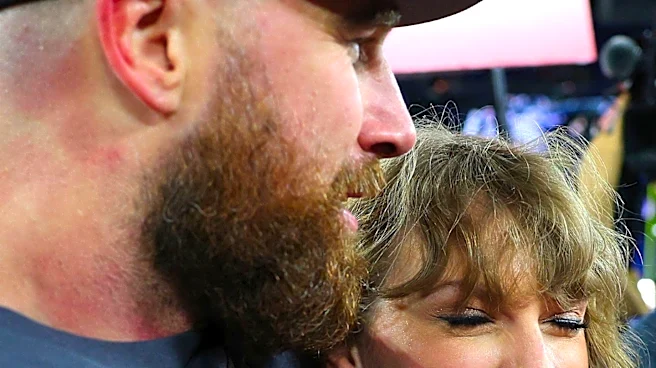
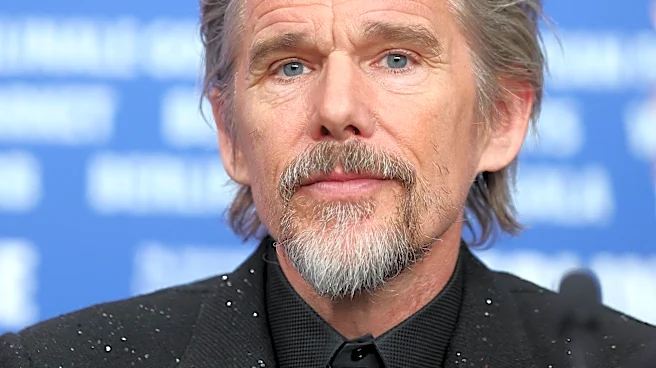
Actor Ethan Hawke recently drew a parallel between Winona Ryder's immense popularity and cultural impact in the 1990s and Taylor Swift's current status as a global phenomenon. Hawke, who co-starred with Ryder in the 1994 film 'Reality Bites,' reflected
on Ryder's influence during that era, stating that 'everything she touched turned to gold.' He highlighted her roles in cult films like 'Heathers,' 'Beetlejuice,' and 'Edward Scissorhands,' which established her as a prominent figure in Hollywood while she was still a teenager. Hawke emphasized that Ryder was the driving force behind 'Reality Bites,' using her star power to greenlight the project and champion director Ben Stiller, who was relatively unknown as a film director at the time. According to Hawke, Ryder's belief in the script and Stiller was crucial for the film's realization.
Why It's Important?
Ethan Hawke's comparison underscores the significant cultural impact certain celebrities have on their respective generations and the entertainment industry. Winona Ryder's influence in the 1990s extended beyond her acting roles; she became a style icon and a voice for Generation X. This historical perspective highlights how star power can shape film projects, launch careers, and define cultural trends. For the U.S. entertainment industry, Ryder's story exemplifies the power of a leading actor to drive creative decisions and bring unique stories to the screen. The comparison to Taylor Swift also illustrates the enduring nature of celebrity influence, showing how artists can transcend their primary medium to become broader cultural touchstones, impacting fashion, music, and social discourse. This reflection provides valuable insight into the dynamics of fame and influence within Hollywood over different eras.
What's Next?
While Hawke's comments are retrospective, they contribute to ongoing discussions about celebrity influence and the legacy of iconic figures in entertainment. Such comparisons often spark renewed interest in the careers of actors like Winona Ryder, potentially leading to re-evaluations of their past works or increased engagement with their current projects. For the broader entertainment industry, these discussions can inform how studios and producers identify and cultivate talent, recognizing the potential for certain individuals to become cultural phenomena. It also reinforces the idea that an actor's personal brand and cultural resonance can be as significant as their acting prowess in shaping their career trajectory and impact on the industry. This type of commentary often fuels nostalgia and critical re-appraisal of past cinematic eras.
Beyond the Headlines
Hawke's analogy delves into the deeper implications of celebrity as a cultural phenomenon. It suggests that certain individuals transcend mere fame to become symbols of their time, embodying the zeitgeist and influencing societal norms, fashion, and artistic expression. Winona Ryder, much like Taylor Swift today, represented a particular aesthetic and sensibility that resonated deeply with her audience, making her a powerful cultural force. This phenomenon highlights the symbiotic relationship between celebrities and their fans, where public figures not only entertain but also reflect and shape collective identities. Ethically, it raises questions about the responsibility that comes with such immense influence and how celebrities navigate their roles as cultural arbiters. Legally, the power of a star to greenlight projects speaks to the economic leverage top-tier talent holds within the industry, impacting creative control and project viability.