








What's Happening?
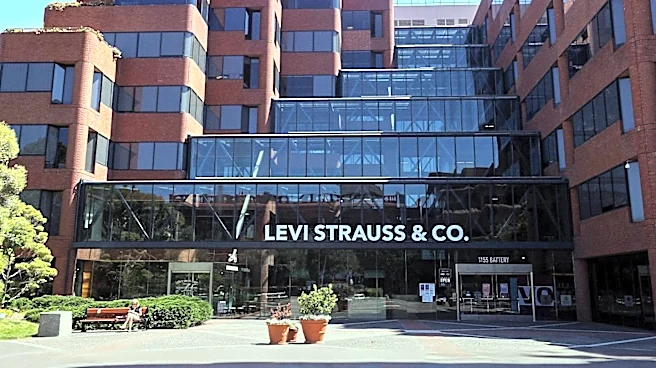
Levi Strauss & Co. (LEVI) shares are currently facing volatility as investors re-evaluate the stock following a recent rally. This comes despite the company outlining an optimistic fiscal 2026 roadmap, which emphasizes direct-to-consumer (DTC) growth
and an expansion into lifestyle categories beyond its traditional denim offerings. Management has also increased both its revenue and earnings outlook. However, concerns are emerging that these heightened expectations might now be too ambitious. For long-term investors, the expanding DTC business is seen as a positive development, as it fosters stronger customer relationships, allows the company to retain more profit, and is supported by consistent e-commerce gains and a substantial loyalty base that encourages repeat sales. The company's current market capitalization stands at $7.56 billion, with a year-to-date price performance of -2.46% and an average trading volume of 2,538,062.
Why It's Important?
The current situation for Levi Strauss & Co. is important for the U.S. retail and apparel industry as it highlights the ongoing shift towards direct-to-consumer models and diversification beyond core product lines. The company's strategy to expand into lifestyle categories and strengthen its DTC channels could serve as a blueprint for other legacy brands seeking to adapt to evolving consumer preferences and market dynamics. A successful execution of this strategy could lead to increased profitability and market share for Levi Strauss, demonstrating the viability of such transformations. Conversely, if the company struggles with its debt load or faces adverse trade policies, it could impact its ability to invest in marketing, new stores, or shareholder returns, making future growth less predictable. This scenario would underscore the challenges faced by established brands in navigating a complex economic landscape while attempting significant strategic shifts. The outcome will influence investor confidence in similar retail transformations and the broader economic health of the apparel sector.
What's Next?
Levi Strauss & Co. will need to demonstrate consistent execution of its direct-to-consumer growth and lifestyle category expansion strategies to alleviate investor concerns regarding potentially over-optimistic expectations. The company's ability to manage its debt load and mitigate the impact of shifting tariffs will be crucial in ensuring that cash is available for strategic investments and shareholder returns. Investors will closely monitor upcoming earnings reports and management commentary for signs of progress in these areas. The success of new product launches and the performance of its e-commerce platform will also be key indicators. Furthermore, the company's efforts to maintain strong customer loyalty and drive repeat sales through its DTC channels will be vital for sustaining long-term growth. Any significant downturn in demand or unfavorable trade policy changes could necessitate a re-evaluation of its growth trajectory and financial outlook.
Beyond the Headlines
Beyond the immediate stock volatility, Levi Strauss & Co.'s strategic pivot reflects a broader trend in the retail industry where traditional brands are striving to redefine their identity and revenue streams. The emphasis on direct-to-consumer sales not only enhances profit margins but also provides invaluable direct feedback from customers, allowing for more agile product development and marketing strategies. This shift also touches upon the ethical and cultural dimensions of brand loyalty, as companies aim to build deeper connections with consumers beyond transactional relationships. The expansion into lifestyle categories signifies an attempt to capture a larger share of consumer spending by offering a more comprehensive brand experience, moving beyond being solely a denim company. However, this diversification also presents challenges in maintaining brand authenticity and managing a broader product portfolio, requiring careful balancing to avoid diluting the core brand identity that has sustained Levi Strauss for decades. The success or struggles of this transformation will offer insights into the future of heritage brands in a rapidly changing retail environment.