





What's Happening?
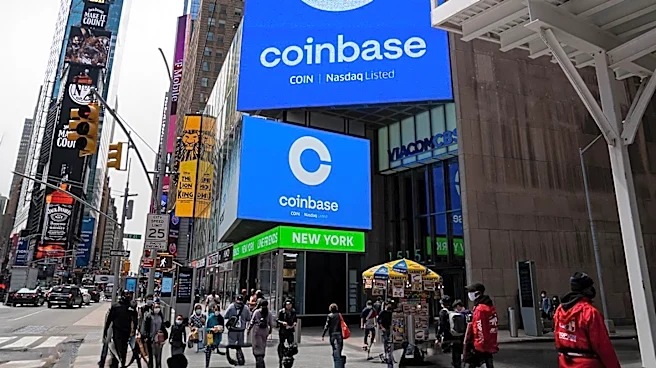
Shares of Coinbase Global (COIN) experienced a 10.6% decline on Friday, October 30, 2026, the day after the company released its third-quarter earnings report. This drop occurred while the S&P 500 fell by 1.8%. News reports attributed Coinbase's stock
decline to a combination of a record theft at the crypto exchange Binance and a weak trading quarter for Coinbase. Wall Street analysts also reportedly lowered their price targets for Coinbase after the earnings results. In the third quarter of 2026, Coinbase generated $1.22 billion in revenue, which was consistent with its second-quarter performance but represented a 35.0% decrease compared to the same quarter in the previous year. Despite revenue meeting analyst expectations, earnings were reported at $0.28 per share, surpassing an expected loss of $0.16 per share. Management noted a 10% decrease in overall crypto spot trading volume from the second quarter, partially offset by growth in prediction markets, which achieved an annualized revenue rate of $200 million during the quarter. Subscription services accounted for approximately 49% of the quarter's total revenue.
Why It's Important?
The significant drop in Coinbase's stock, alongside other crypto-related companies like Robinhood Markets and Bakkt, underscores the volatility and interconnectedness of the cryptocurrency market. The reported $6.3 billion theft at Binance, a major player in the crypto exchange space, likely triggered broader investor apprehension and a flight from crypto assets, impacting even companies not directly involved in the incident. Furthermore, Coinbase's flat revenue and decreased spot trading volume highlight challenges within the crypto trading sector, suggesting a potential slowdown in market activity. While the growth in prediction markets offers a new revenue stream, it was not enough to fully counteract the negative sentiment. This situation is critical for investors and stakeholders in the U.S. financial market, as it reflects the ongoing risks associated with digital assets and the potential for external events to rapidly influence stock performance. The divergence from the broader financial sector, which saw a much smaller decline, emphasizes the unique risk profile of crypto-centric companies.
What's Next?
The immediate aftermath of this stock decline will likely involve continued scrutiny from investors and analysts regarding Coinbase's ability to navigate a volatile crypto market and mitigate the impact of industry-wide security incidents. The company's reliance on subscription services for nearly half of its revenue suggests a strategic shift towards more stable income streams, which may be further emphasized in future reports. However, the core trading business remains a significant factor in its valuation. Coinbase will need to demonstrate resilience and potentially diversify its offerings or enhance security measures to reassure investors. The broader cryptocurrency market will also be under pressure to address security vulnerabilities, as major thefts can erode trust and lead to stricter regulatory oversight. Investors will be closely watching for any product changes or strategic announcements from Coinbase and other crypto exchanges aimed at bolstering security and fostering market confidence.
Beyond the Headlines
The incident highlights a recurring theme in the digital asset space: the tension between innovation and security. While AI agents and new trading mechanisms like prediction markets represent technological advancements, they also introduce new vectors for risk. The market's reaction to the Binance theft, even impacting unrelated entities like Coinbase, illustrates the systemic risk inherent in a nascent and interconnected industry. This event could accelerate calls for more robust regulatory frameworks and industry-wide security standards in the U.S. and globally. It also prompts a deeper consideration of how traditional financial market principles, such as investor protection and systemic stability, can be effectively applied to the rapidly evolving digital asset landscape. The long-term success of companies like Coinbase will depend not only on their ability to innovate but also on their capacity to build and maintain trust in an environment prone to high-profile security breaches.