






What's Happening?
Nigerian defense-technology startup Terra Industries has raised an additional $18 million, bringing its total seed funding to $52 million. This capital injection will support the company's manufacturing, engineering, operations, and business development
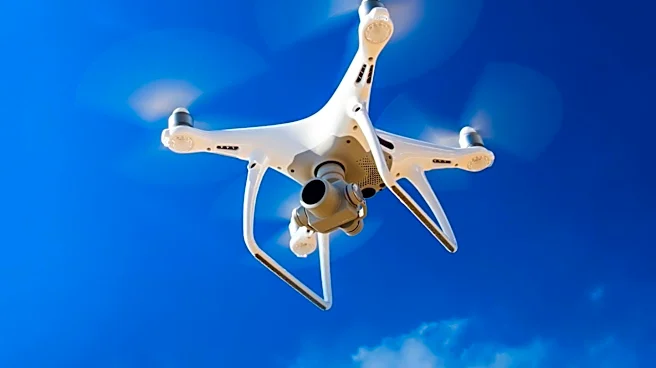
teams, as well as deployments across Africa and other markets in the Global South. Terra Industries is preparing to open its Pax-2 factory in Ghana in the fourth quarter, a 34,000-square-foot facility projected to become Africa’s largest drone factory. Additionally, the company will establish its first international office in London. This expansion follows a previous funding round in February that brought its total to $34 million, at which point the company announced plans to scale production of drones, surveillance towers, and unmanned ground vehicles. Terra Industries, founded in 2024 by Nathan Nwachuku and Maxwell Maduka, develops autonomous aerial, land, and maritime systems. Its systems are currently used to protect critical infrastructure assets valued at approximately $11 billion across several African countries.
Why It's Important?
This development signifies a growing trend of indigenous leadership in the defense technology sector within Africa, offering locally built alternatives to a continent that historically receives a small share of global defense-technology funding. The establishment of Africa's largest drone factory in Ghana by a Nigerian company highlights increasing regional self-sufficiency and technological advancement. For the U.S., this could mean new opportunities for collaboration or competition in the global defense market, particularly as African nations seek diverse suppliers. The expansion into London and plans for further growth in the Gulf, South America, and South Asia indicate Terra Industries' ambition to become a significant international player. This could impact U.S. defense contractors and technology firms by introducing a new competitor with a strong regional base and a focus on the Global South, potentially shifting market dynamics and influencing future defense procurement strategies.
What's Next?
Terra Industries' Pax-2 factory in Ghana is scheduled to open in the fourth quarter of the current year. This facility is designed to produce the company's aerial-systems portfolio and aims to produce up to 50,000 systems annually by 2028. The company will also be opening its international office in London. Following these immediate steps, Terra Industries plans further expansion into the Gulf, South America, and South Asia. The success of the Ghana factory and the London office will likely dictate the pace and scope of these future international expansions. Major stakeholders, including African governments and infrastructure operators, will be closely watching the operational launch of the Pax-2 factory, as it represents a significant step towards localized defense technology solutions. The company's ability to meet its production targets and expand its market reach will be crucial in establishing its long-term position in the global defense technology landscape.
Beyond the Headlines
The rise of companies like Terra Industries points to a broader shift in global technological capabilities, with African nations increasingly developing and manufacturing advanced defense systems. This trend has significant ethical and geopolitical implications. Ethically, the development of autonomous defense systems raises questions about their deployment, control, and potential impact on regional conflicts and human rights. Geopolitically, the emergence of African-led defense technology firms could alter traditional power dynamics, reducing reliance on external military aid and potentially fostering greater regional stability or, conversely, intensifying arms races. The focus on protecting critical infrastructure assets valued at $11 billion underscores the growing importance of cybersecurity and physical security in an interconnected world. This development also highlights the potential for technology transfer and skill development within African nations, fostering economic growth and technological independence beyond the immediate defense sector.