



What's Happening?
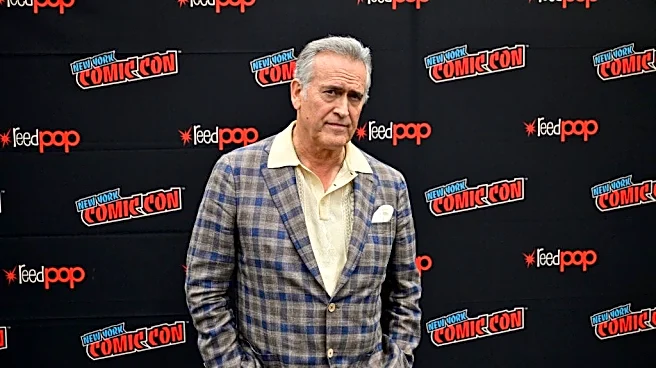
Bruce Campbell, the 68-year-old actor renowned for his role as Ash Williams in the 'Evil Dead' franchise, has publicly shared that doctors have given him a five-year prognosis in his ongoing battle with cancer. Campbell disclosed this update during an appearance
on The Adam Carolla Show, approximately six months after he initially announced his diagnosis. While he did not specify the type of cancer, he stated it is a 'five-year deal.' Despite the serious prognosis, Campbell expressed his determination to live life fully, emphasizing his decision to 'live with it, not die from it.' He also mentioned that he is focusing on his work, including promoting his new project, 'Ernie & Emma,' and avoiding the 'cancer rabbit hole' of extensive online research or support groups.
Why It's Important?
This announcement from a prominent figure like Bruce Campbell brings renewed attention to the personal struggles individuals face when dealing with serious health diagnoses, particularly cancer. His public stance on continuing to live life to the fullest despite a challenging prognosis can serve as an inspiration for many facing similar circumstances, highlighting resilience and a positive mindset. For fans of the 'Evil Dead' franchise and his extensive career, this news elicits concern but also admiration for his candor and strength. It also underscores the reality that even public figures are not immune to severe health challenges, fostering a sense of shared human experience. Campbell's decision to focus on work and avoid dwelling on the illness could also influence how others approach their own health battles, prioritizing mental well-being and continued engagement in life.
What's Next?
Bruce Campbell plans to continue his professional engagements, including promoting his new movie, 'Ernie & Emma.' His public statements indicate a commitment to maintaining his career and personal life as normally as possible, despite his health challenges. Fans can anticipate his continued presence in the entertainment industry, albeit with the underlying context of his health. There may be increased public interest in his upcoming projects and appearances as people follow his journey. His approach to managing his illness, by focusing on living rather than succumbing to the diagnosis, suggests he will continue to engage with his work and audience in a positive and proactive manner, potentially inspiring others to adopt a similar outlook when facing personal adversities.
Beyond the Headlines
Campbell's candid revelation about his cancer prognosis and his chosen approach to living with it touches upon broader societal discussions about mortality, resilience, and the impact of serious illness on an individual's life and career. His decision to avoid extensive online research or support groups, while personal, highlights varying coping mechanisms people adopt when facing life-threatening conditions. It also subtly challenges the common narrative that constant engagement with every aspect of an illness is always beneficial. Furthermore, his continued dedication to his craft despite his health status underscores the profound connection many artists have to their work, viewing it as a source of purpose and continuity. This situation could spark conversations about how public figures manage their health privately versus publicly, and the role they play in destigmatizing serious illnesses.