






What's Happening?
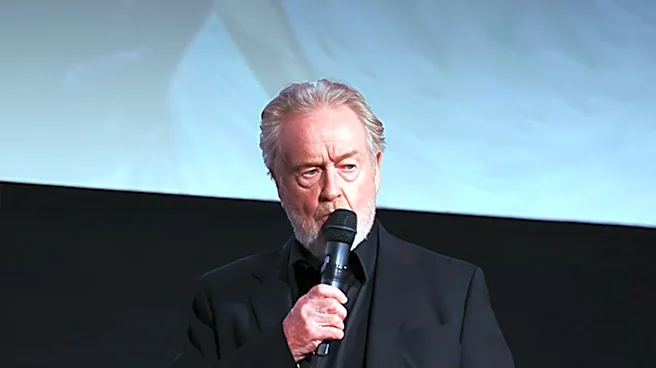
Filmmaker Ridley Scott has reiterated his long-standing disapproval of Stanley Kubrick's 1980 film adaptation of Stephen King's novel, 'The Shining.' Scott, known for directing the 'Alien' franchise, stated in an interview with Deadline that he prefers
the original book, claiming Kubrick "ruined the house, the place, and the light." He found Kubrick's brighter, more modern visual style to be off-putting and garish compared to the darker atmosphere of the novel. Scott also noted that the film failed to depict the Boiler Room as a monstrous entity, a detail he appreciated in King's book. Despite his aesthetic objections to 'The Shining,' Scott maintained a brief friendship with Kubrick, which began when Kubrick sought Scott's advice on the chestburster scene in 'Alien.' Kubrick later provided aerial footage from 'The Shining' for Scott to use in 'Blade Runner.'
Why It's Important?
This ongoing discussion highlights the complex relationship between original literary works and their cinematic adaptations, particularly when iconic directors are involved. Ridley Scott's strong opinions, shared by Stephen King himself, underscore the challenges of translating a beloved novel's essence to the screen. For film enthusiasts and critics, it reignites debates about artistic interpretation versus fidelity to source material. The differing views on 'The Shining'—from initial critical distaste to its current status as a classic—illustrate how cinematic assessments can evolve over time. This conversation also provides insight into the creative processes and personal preferences of influential filmmakers like Scott and Kubrick, revealing how even respected peers can hold divergent artistic perspectives on the same work.
What's Next?
While Ridley Scott's comments are a reassertion of a long-held view rather than a new development, they contribute to the ongoing critical discourse surrounding 'The Shining.' It is unlikely to lead to any direct action or re-evaluation of the film's status, given its established place in cinematic history. However, such statements from prominent figures often spark renewed interest in both the film and the original novel, potentially encouraging new generations of viewers and readers to engage with the work and form their own opinions. The discussion may also prompt further analysis of the creative choices made by Kubrick and the impact of those choices on the film's reception and legacy.
Beyond the Headlines
The enduring debate over 'The Shining' extends beyond mere aesthetic preferences, touching upon deeper questions of artistic ownership and the nature of adaptation. Stephen King's well-documented dissatisfaction with Kubrick's version, to the point of creating his own television adaptation, highlights the author's struggle to see his vision fully realized on screen. Ridley Scott's similar critique reinforces the idea that a director's interpretation, no matter how brilliant, can fundamentally alter the spirit of the original work. This scenario exemplifies the tension between a director's artistic freedom and the expectations of an author and their audience, raising ethical considerations about how much a filmmaker can or should deviate from source material, especially when the source is highly regarded.