
What's Happening?
Major League Baseball (MLB) is exploring the implementation of an Automated Ball-Strike (ABS) Challenge System for checked-swing calls, following successful testing in the Triple-A Pacific Coast League.
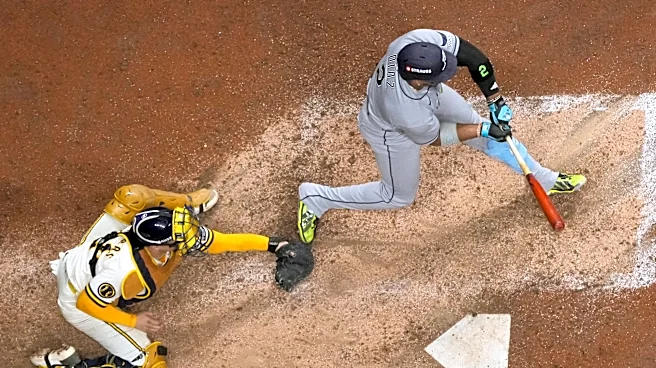
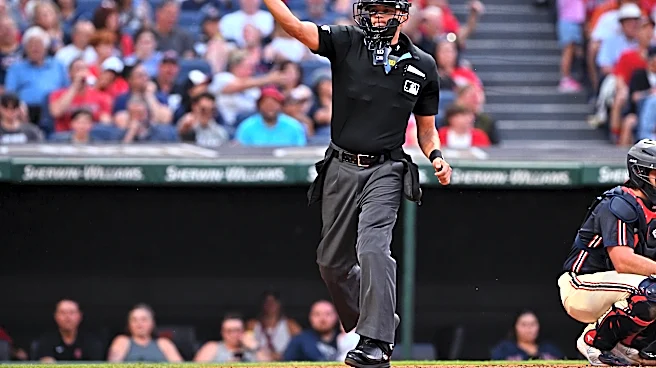
This season, the system allowed batters to appeal checked-swing calls, leading to a notable decrease in swing-and-miss rates on breaking and offspeed pitches. Specifically, whiff rates dropped by 2.6 percentage points on curveballs, sliders, sweepers, and knuckleballs, and by 3.6 percentage points on changeups, splitters, and screwballs. The ABS system defines a swing as when 'the maximum angle between the bat head and the bat handle exceeds 45 degrees.' This initiative aims to bring clarity to the ambiguous definition of a checked swing in official rules, which currently state only that 'A strike is a legal pitch when so called by the umpire, which is struck at by the batter and is missed.' The testing also showed that batters appealed 0.25 calls per game with a 55.5% overturn rate, contributing to an overall whiff rate decline from 25.3% to 24.1%.
Why It's Important?
The potential adoption of the ABS Challenge System for checked swings could significantly impact the game of baseball by addressing the rising strikeout rates that have characterized the sport over the past two decades. Strikeout rates have climbed from 16.4% of plate appearances in 2006 to 23.9% last season, reaching a record 27% in 2022. By providing a more objective and consistent definition of a checked swing, the system could empower hitters, potentially leading to more balls in play and a more dynamic offensive game. This change could reduce player frustration with subjective umpire calls, as noted by Arizona Diamondbacks general manager Mike Hazen. While some, like Brewers manager Pat Murphy, believe batters already get away with too many swings, the data from minor league testing suggests a benefit for hitters, which could shift the balance between pitchers and batters. The move also aligns with MLB's broader efforts to modernize the game and reduce disputes, as seen with the introduction of the pitch clock and the ABS system for ball-strike calls.
What's Next?
While minor league testing has shown promising results, any big league implementation of the ABS system for checked swings is not expected until 2028 at the earliest, according to Baseball Commissioner Rob Manfred. This timeline suggests a cautious approach, allowing for further refinement of the system and its rules, such as potentially adjusting the 45-degree angle threshold for what constitutes a swing. Stakeholders, including general managers like the Los Angeles Dodgers' Brandon Gomes, have indicated that modifications might be necessary to ensure the rule accurately reflects the spirit of the game. The ongoing evaluation will likely involve continued testing in various minor league settings to gather more data and feedback. The league will also need to consider the reactions of players and managers, some of whom, like New York Yankees pitcher Gerrit Cole, advocate for stability in rule changes after several recent adjustments. The ultimate decision will weigh the benefits of increased accuracy and reduced disputes against the desire to maintain the traditional elements of the game.
Beyond the Headlines
The debate over checked swings and the potential for automated review touches upon deeper philosophical questions about the role of technology in sports and the balance between human judgment and objective measurement. Historically, the ambiguity of the checked swing call has been a part of baseball's lore, often leading to dramatic moments and strategic appeals. Introducing an automated system removes this element of human interpretation, potentially streamlining the game but also altering a long-standing aspect of its character. This shift could lead to a more data-driven approach to player development, as hitters and coaches adapt to a precise definition of a swing. Furthermore, the success of this system could pave the way for other automated officiating in baseball and other sports, raising ethical considerations about the future of human officials. The move reflects a broader trend in professional sports to leverage technology for greater fairness and efficiency, but it also sparks discussions about preserving the human element and the nuanced artistry of the game.