





What's Happening?
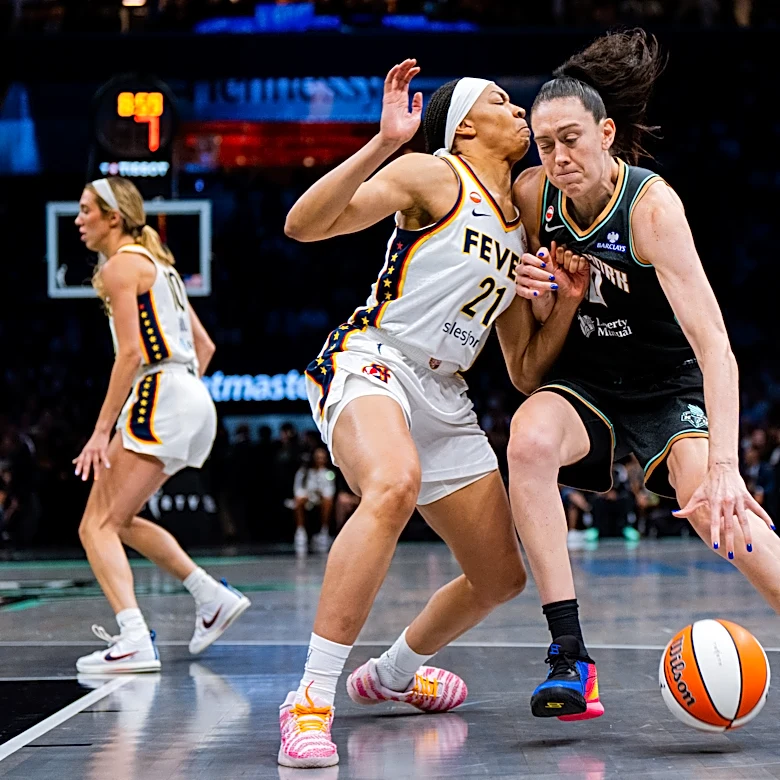
New York Liberty star Breanna Stewart has emphasized the importance of maintaining the WNBA as a 'safe space' for fans and players, amidst ongoing debates and rallies concerning the participation of transgender women in the league. The issue gained prominence
after Indiana Fever's Sophie Cunningham expressed opposition to transgender women competing in women's sports. This led to peaceful rallies representing both sides of the debate outside Indiana Fever games, including one before the Fever-Liberty game. Stewart stated, "I want Liberty fans and even Indy fans that are going to come here tonight to be able to have this arena be a safe space." She acknowledged that while everyone is entitled to their opinion, attempts to divide teams and players should not be tolerated. The WNBA's collective bargaining agreement restricts participation to women but lacks specific language on gender identity or sex assigned at birth.
Why It's Important?
Breanna Stewart's call for a 'safe space' highlights the WNBA's historical role as an inclusive platform and the current challenges it faces regarding transgender athlete participation. This debate impacts the league's image, its fan base, and the internal dynamics among players. The WNBA has a strong association with social justice and inclusivity, making this issue particularly sensitive. The differing views, as expressed by Stewart and Cunningham, reflect broader societal discussions on gender identity in sports. How the league navigates this will influence its future policies, its relationship with LGBTQ+ communities, and its ability to maintain unity among its diverse stakeholders. The incident where fans were asked to cover shirts with messages about transgender women, later deemed permissible by the league, further underscores the evolving nature of these discussions within professional sports.
What's Next?
The WNBA will likely face continued pressure to clarify its stance and policies regarding transgender athlete participation. This may involve further discussions within the league, potentially leading to amendments or more specific language in its collective bargaining agreement or official guidelines. Players like Breanna Stewart and Sophie Cunningham will continue to voice their perspectives, contributing to the ongoing dialogue. The league's response will be crucial in shaping its identity and ensuring it remains a welcoming environment for all. Future games may continue to see protests or expressions of differing viewpoints, requiring the league and teams to manage these situations carefully to maintain a respectful atmosphere.
Beyond the Headlines
The debate within the WNBA about transgender women's participation touches upon complex ethical, legal, and social dimensions. It forces a re-examination of what defines 'women's sports' and how to balance inclusivity with fairness and competitive integrity. Stewart's emphasis on a 'safe space' speaks to the emotional and psychological well-being of athletes and fans, suggesting that sports arenas are not just venues for competition but also communities. The differing opinions among players, even within the same league, highlight the nuanced nature of the issue and the difficulty in finding universally accepted solutions. This situation also reflects the broader cultural shifts regarding gender identity and the increasing visibility of transgender individuals in public life, prompting institutions like professional sports leagues to adapt and define their values in a rapidly changing world.