



What's Happening?
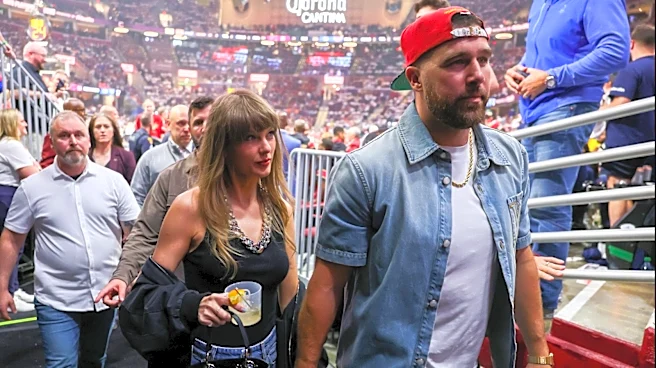
Actress Dakota Johnson has publicly addressed recent rumors linking her romantically with musician Machine Gun Kelly (MGK). Reports from People magazine suggested the pair had been 'hanging out and seeing each other under the radar for months,' allegedly
hitting it off at Taylor Swift and Travis Kelce’s wedding in July. However, Johnson, speaking on Vogue's 'The Run-Through' podcast, dismissed these claims. She stated that she doesn't 'have the energy' to combat every internet rumor, emphasizing that people will 'believe what they wanna believe.' Johnson highlighted that even dining with her manager or lawyer often leads to speculative headlines about a 'mystery man.' She expressed a preference to focus on other aspects of her life rather than engaging with what she described as 'ridiculous' and often untrue online content.
Why It's Important?
This situation underscores the pervasive nature of celebrity gossip and the challenges public figures face in maintaining privacy. For entertainers like Dakota Johnson, constant speculation about personal relationships can overshadow professional achievements and create a distorted public image. The rapid dissemination of unverified information through online platforms and celebrity news outlets often forces individuals into a position where they must either ignore or directly address rumors, both of which carry implications for their public perception and mental well-being. It also highlights the public's intense interest in the private lives of celebrities, often fueled by social media and entertainment news cycles, which can blur the lines between public and private spheres. The incident reflects a broader trend where the personal lives of public figures become a form of entertainment, regardless of accuracy.
What's Next?
Given Dakota Johnson's direct dismissal of the rumors, it is likely that the immediate speculation surrounding her and Machine Gun Kelly will subside. However, the nature of celebrity culture suggests that new rumors or interpretations of her public appearances may emerge in the future. Johnson's stance indicates a continued strategy of prioritizing her personal focus over engaging with speculative media narratives. For entertainment news outlets, this response might lead to a temporary shift in focus, but the underlying public appetite for celebrity relationship news will persist, ensuring that similar situations will arise for other public figures. The incident serves as a reminder of the ongoing dynamic between celebrity privacy and media scrutiny.
Beyond the Headlines
The phenomenon of celebrity romance rumors, as exemplified by this case, touches upon deeper societal aspects of parasocial relationships and the commodification of personal lives. The public's investment in celebrity relationships often stems from a desire for connection or escapism, treating these narratives as a form of ongoing drama. This can lead to a dehumanization of public figures, where their personal lives are viewed as content rather than private experiences. Furthermore, the ease with which rumors spread online raises questions about media ethics and the responsibility of platforms and publications to verify information before dissemination. Johnson's comment about people believing 'what they wanna believe' reflects a broader challenge in the digital age, where confirmation bias and the pursuit of sensationalism can often override factual accuracy, impacting not only celebrities but also public discourse at large.