



What's Happening?
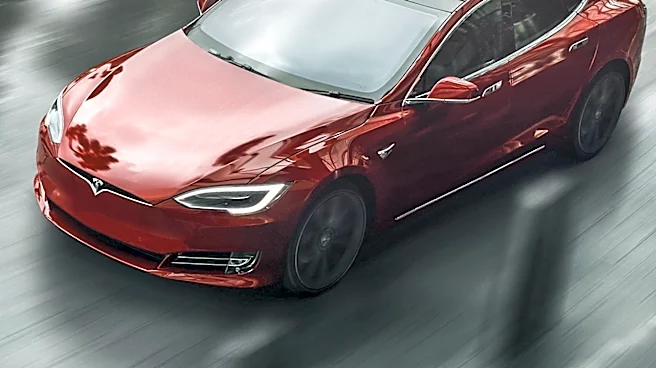
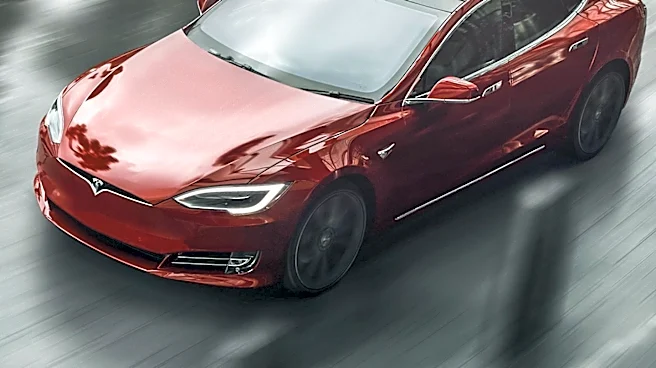
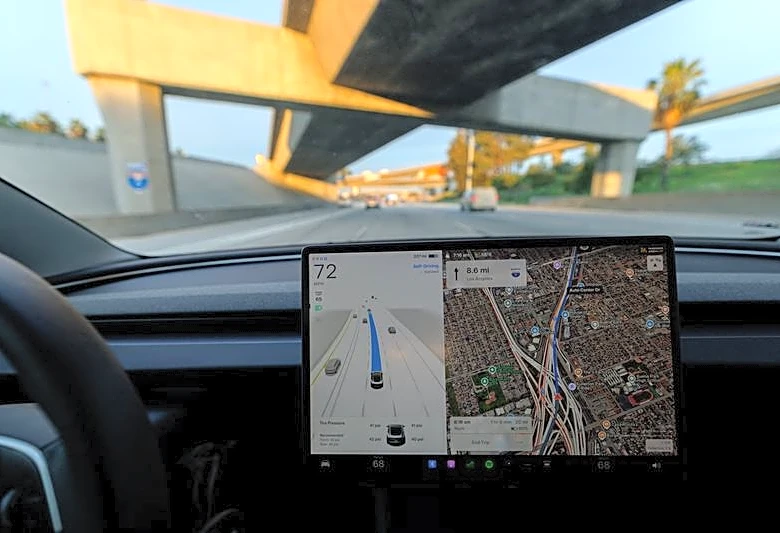
U.S.-built Tesla vehicles are selling for higher prices than newer, Chinese-made models in Korea's used car market. This unusual trend is driven by the eligibility of U.S.-manufactured Teslas for the company's supervised Full Self-Driving (FSD) software,
a Level 2 automated driving system. While the basic rule dictates that cars depreciate over time, older U.S.-made Model X, Model Y, and Model S vehicles are commanding premiums, with some used Model X units listed at over 50 percent higher than new ones. This is because Tesla began rolling out 'FSD v14 Lite' in Korea for U.S.-built Model 3 and Model Y vehicles manufactured between 2019 and 2023, which can receive the software update without hardware changes. Chinese-built Teslas, which have been more recently sold in Korea, are excluded from this program due to the absence of an equivalent clause in the Korea-China trade agreement regarding automotive safety standards, unlike the Korea-U.S. FTA.
Why It's Important?
This phenomenon highlights the significant impact of software features, particularly advanced driver-assistance systems like FSD, on vehicle valuation and consumer demand. It creates a unique market dynamic where older models are more desirable and valuable than newer ones, solely based on software eligibility. For U.S. automotive manufacturers, this demonstrates a competitive advantage derived from trade agreements and technological leadership. It also underscores the complexities of international trade and regulatory frameworks, as the Korea-U.S. FTA's mutual-recognition clause for automotive safety standards allows U.S.-built Teslas to operate FSD without separate Korean certification. Conversely, it creates a disadvantage for Chinese-built models and impacts consumer choices in the Korean market, potentially influencing future trade negotiations and manufacturing strategies.
What's Next?
The disparity in pricing and demand between U.S.-built and Chinese-built Teslas in Korea is likely to persist as long as the FSD eligibility remains tied to the country of origin and trade agreements. Tesla halted production of Model X and S in Fremont, California, converting the line to humanoid-robot manufacturing, which could further increase the scarcity and value of existing U.S.-built models. The Korean government is unlikely to approve FSD outright soon due to strict restrictions on exporting precise mapping data abroad, which Tesla's system relies on. This situation may lead to continued efforts by some owners of Chinese-made Teslas to use unauthorized methods to unlock FSD, despite warnings from the Ministry of Land, Infrastructure and Transport about illegal modifications and Tesla's remote disabling of such features. The market will continue to adapt to these unique supply and demand pressures.
Beyond the Headlines
This situation delves into the intricate interplay of technology, trade policy, and consumer behavior. It reveals how a software feature can become a primary driver of market value, even overriding traditional factors like vehicle age and newness. The reliance on the Korea-U.S. FTA for FSD activation in U.S.-built Teslas highlights the often-unforeseen consequences of international trade agreements on specific industries and products. Furthermore, the attempts by some owners to 'crack' FSD on ineligible vehicles raise ethical and legal questions about software ownership, intellectual property, and user modification in the context of advanced automotive technology. It also underscores the ongoing global debate about the regulation and safety of autonomous driving systems, particularly when national security concerns (like mapping data) intersect with technological advancement.