




What's Happening?
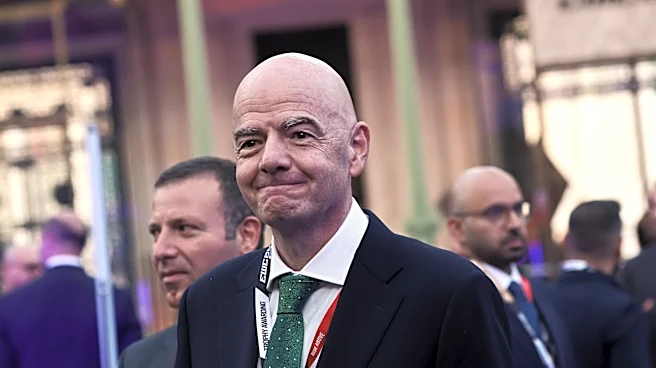
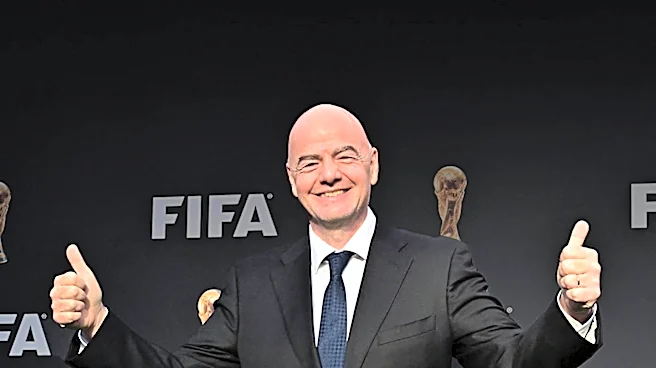
UEFA is intensifying its conflict with FIFA by seeking evidence in U.S. courts for potential criminal proceedings in Switzerland against FIFA President Gianni Infantino. The dispute centers on the abandoned FIFA Forward Enterprise (FFE) proposal, which
aimed to transfer commercial rights of major FIFA tournaments, including the men's and women's World Cups, into a new corporate structure open to private investment. UEFA alleges that the proposal, which involved an estimated $4.2 billion investment and implied a $20 billion valuation, was developed without proper consultation of FIFA's Council, regional confederations, and 211 member associations. While the FFE project was ultimately abandoned due to widespread opposition, UEFA is now pursuing legal avenues to investigate how the transaction was conceived, structured, valued, and approved. The evidence-gathering effort targets Florida-based FIFA entities, including FIFA (AMERICAS), Inc. and FWC2026 US, Inc., to support a contemplated criminal complaint in Switzerland concerning alleged criminal mismanagement under Article 158 of the Swiss Criminal Code. It is important to note that these are allegations, and Infantino has not been found guilty of any criminal wrongdoing.
Why It's Important?
This legal confrontation transcends a mere disagreement over a commercial deal; it represents a fundamental battle over the governance and institutional architecture of global football. The World Cup, as one of the most commercially valuable sporting properties, generates substantial revenues through broadcasting, sponsorship, and licensing. The FFE proposal raised critical questions about whether assets created by world football should remain solely under the control of its governing institutions or if private investors can legitimately acquire long-term economic interests in them. FIFA, unlike a typical corporation, is a governing body representing 211 national football associations, making decisions about its assets a matter of governance, accountability, and authority. UEFA's actions challenge the concentration of power in the hands of a president and a small executive circle, advocating for reforms that limit presidential authority and ensure institutional governance. The outcome of this dispute could significantly influence the economics and governance of the world's most popular sport for decades, affecting national associations, players, supporters, and investors globally.
What's Next?
UEFA will continue its efforts to gather evidence in the U.S. legal system to support potential criminal proceedings in Switzerland against FIFA President Gianni Infantino and possibly other FIFA officials or advisers. The evidence obtained will be assessed to determine the viability and scope of these contemplated proceedings. While UEFA has provisionally suspended its threat to withdraw European teams from upcoming FIFA competitions, its position remains under review, indicating that further actions could be taken depending on the progression of the legal battle. The political message from European football emphasizes a long-term commitment to reforming FIFA, restoring limits on presidential authority, and ensuring institutional governance. The legal outcome remains uncertain, as evidence must be thoroughly assessed and allegations proven through the appropriate legal processes. However, the political consequences are already significant, having triggered a major confrontation between two of the most powerful institutions in global sport.
Beyond the Headlines
This conflict highlights deeper issues concerning transparency, accountability, and the ethical implications of commercializing global sporting assets. The debate extends beyond the immediate financial aspects of the FFE proposal to question the very nature of international sports organizations and their responsibilities to their member associations and the public. The concentration of power within FIFA, particularly in the presidential office, is under scrutiny, raising concerns about potential conflicts of interest and the integrity of decision-making processes. The legal challenge could set a precedent for how major international sports bodies are governed and how their commercial assets are managed, potentially leading to increased oversight and more democratic decision-making structures. It also underscores the ongoing tension between the commercial imperatives of modern sports and the foundational principles of fair play, institutional integrity, and equitable representation among member organizations. The battle reflects a broader societal discussion about who controls valuable global resources and how those resources are managed for the collective good.