




What's Happening?
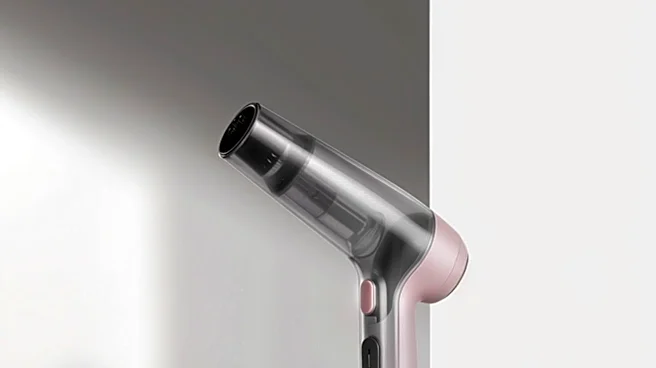
The Dyson Supersonic hair dryer, launched in 2016, continues to be a highly sought-after beauty product despite its premium price, ranging from $299 to $649. Known for its innovative design, powerful airflow, and features aimed at minimizing hair damage,
the Supersonic has maintained its status as a top-tier hair dryer. However, the market has seen a rise in more affordable alternatives, often referred to as 'dupes,' that aim to replicate Dyson's performance and design at a fraction of the cost. Brands like Laifen Swift and Dreame Gleam are emerging as strong competitors, offering similar features such as high-speed motors, ionic technology for frizz reduction, and compact designs. These alternatives are gaining popularity by providing comparable drying experiences and results, including quick drying times and smooth finishes, making high-performance hair drying technology more accessible to a wider consumer base.
Why It's Important?
The emergence of high-quality, affordable alternatives to premium home-tech lifestyle products like the Dyson Supersonic signifies a significant shift in the consumer electronics market. This trend democratizes access to advanced technology, allowing more consumers to benefit from features previously exclusive to high-end brands. For Dyson, this means increased competition and pressure to innovate further or adjust pricing strategies to maintain market dominance. For consumers, it translates into more choices and better value, as they can achieve similar results without the substantial financial investment. This competitive landscape encourages innovation across the industry, pushing manufacturers to develop more efficient and cost-effective solutions. It also highlights the growing consumer demand for performance and quality at accessible price points, influencing product development and marketing strategies for both established luxury brands and newer, budget-friendly entrants.
What's Next?
The market for home-tech lifestyle products is likely to see continued innovation and increased competition, particularly in the mid-range price segment. Dyson may respond by introducing new features, enhancing existing models, or potentially exploring more accessible product lines to counter the rise of 'dupes.' Competitors will likely continue to refine their offerings, focusing on improving performance, durability, and design to further close the gap with premium brands. Consumers can anticipate a broader array of choices, with ongoing advancements in hair drying technology, air purification, and other home appliances. The success of affordable alternatives could also prompt other luxury brands in various sectors to re-evaluate their pricing and product strategies, potentially leading to a more competitive and consumer-friendly market overall. The focus will remain on delivering high performance and innovative features at increasingly competitive prices.
Beyond the Headlines
This trend extends beyond hair dryers, reflecting a broader consumer shift towards seeking value and performance across various product categories. The 'dupe' phenomenon challenges the perception that superior quality is exclusively tied to premium pricing and brand prestige. It highlights the power of technological advancements in making sophisticated features more affordable to manufacture and, consequently, more accessible to the general public. This could lead to a re-evaluation of brand loyalty and the perceived value of luxury goods. Furthermore, it raises questions about intellectual property and design inspiration, as competitors often draw heavily from the aesthetic and functional innovations of market leaders. The long-term implication could be a more equitable distribution of advanced technology, fostering a market where innovation is driven not just by luxury, but also by the pursuit of widespread utility and affordability.