








What's Happening?
As the MLB playoffs commence with the Division Series, several key players, including both rookies and established sluggers, are anticipated to significantly influence the outcomes. Among them, Victor Mesa Jr. of the Tampa Bay Rays, despite having fewer
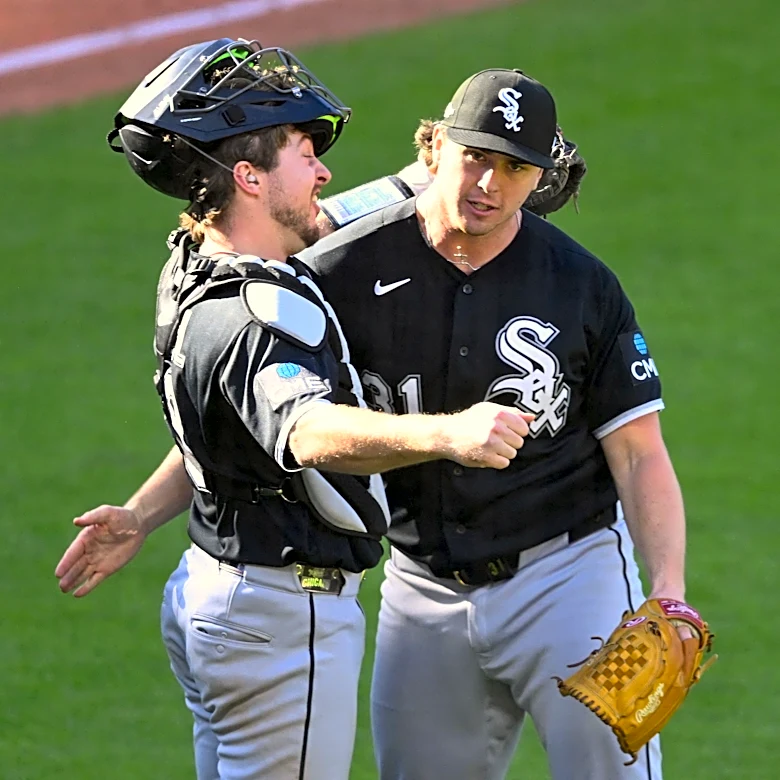
than 100 major league games, has shown considerable impact with 14 home runs in 79 games, a .498 slugging percentage, and an .803 OPS. Tristan Peters of the Chicago White Sox is highlighted for his ability to wear down pitchers, as demonstrated by an 18-pitch at-bat against a top pitcher. For the Atlanta Braves, Matt Olson, a four-time All-Star with a 54-homer season, is expected to be a crucial offensive force, particularly against left-handed pitching, where he maintains a .506 slugging percentage and an .824 OPS. Additionally, DL Hall of the Milwaukee Brewers is noted as a versatile relief pitcher who can provide multi-inning bursts and high-leverage outs, posting a 1.91 ERA and 1.04 WHIP over 61 1/3 innings this season.
Why It's Important?
The performance of these players is critical to their respective teams' success in the high-stakes environment of the MLB Division Series. Rookies like Victor Mesa Jr. and Tristan Peters represent the potential for unexpected breakout performances that can shift momentum and provide crucial offensive sparks. Their ability to perform under playoff pressure can elevate their teams and establish their reputations. For veterans like Matt Olson, the playoffs offer an opportunity to solidify their legacy and lead their teams deeper into the postseason, especially given his past playoff disappointments. The strategic deployment of relief pitchers like DL Hall, who can handle multiple innings and high-pressure situations, is increasingly vital in modern playoff baseball, where bullpen strength often dictates success. These individual contributions can directly impact game outcomes, series results, and ultimately, the path to the World Series.
What's Next?
The immediate next step for these players is to perform in their respective Division Series matchups. Their success or struggles will directly influence their teams' advancement in the MLB playoffs. For rookies, strong performances could accelerate their development and secure more prominent roles in future seasons. For veterans, playoff heroics can enhance their standing within the league and with their fan bases. The strategic decisions made by managers regarding player matchups, particularly for sluggers facing specific pitching handedness or relievers in critical situations, will be under intense scrutiny. The outcomes of these series will set the stage for the League Championship Series and ultimately the World Series, with the performances of these key players being a major determinant.
Beyond the Headlines
Beyond the immediate playoff implications, the spotlight on these players highlights broader trends in MLB. The emphasis on rookie impact reflects the increasing youth movement and the rapid integration of top prospects into critical roles. The detailed analysis of slugging percentages and OPS against different pitching handedness underscores the advanced statistical approaches used in modern baseball to optimize player performance and strategic matchups. The role of versatile relief pitchers like DL Hall also points to the evolving nature of pitching staffs, moving beyond traditional starter-closer roles to more flexible, high-leverage bullpen usage. These individual stories collectively illustrate the dynamic and analytical nature of contemporary baseball, where both raw talent and strategic deployment are essential for postseason success.