






What's Happening?
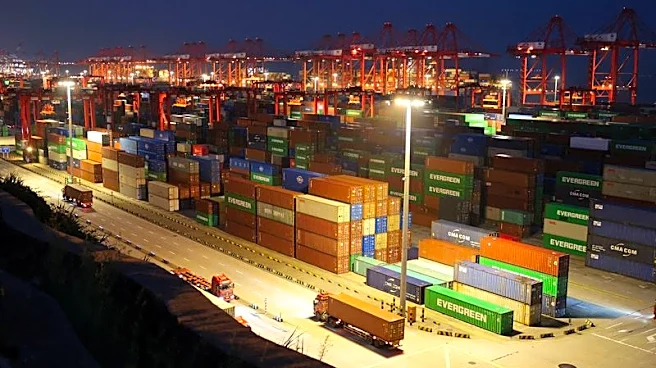
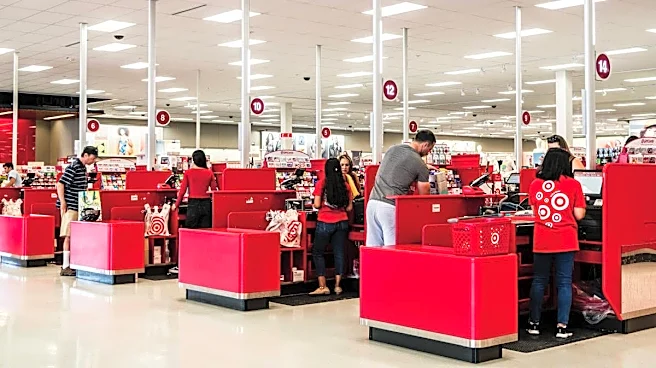
The U.S. warehousing sector is experiencing a significant capacity squeeze as retailers rush to stockpile inventory ahead of impending tariff deadlines. According to the Logistics Managers’ Index (LMI), the industry is expanding at its fastest rate in over
four years, with the index rising to 71.1 in June. This surge is driven by retailers moving Q4 holiday goods earlier to avoid potential new tariffs expected in late July. Inventory levels have increased by 5.7 points, while warehousing utilization has climbed to its highest level since September 2022. However, warehousing capacity has contracted, dropping 3.0 points to 47.5, indicating a tightening market. This capacity crunch is already impacting pricing, with warehousing prices rising 5.5 points year-over-year.
Why It's Important?
The tightening of warehouse capacity has significant implications for the U.S. retail and logistics sectors. As demand outpaces supply, companies face increased costs and logistical challenges. The current situation suggests a supply issue rather than a temporary demand spike, with construction completions lagging behind demand. This imbalance could lead to higher rents and operational costs for businesses, affecting their bottom lines. Retailers and logistics companies may need to secure warehouse space and negotiate rates promptly to mitigate these impacts. The situation underscores the broader economic pressures from trade policies and the need for strategic planning in supply chain management.
What's Next?
Looking ahead, the warehousing sector may continue to face challenges as demand is expected to outstrip new supply. Prologis research indicates that new warehouse deliveries are at their lowest in a decade, and vacancy rates are projected to contract by year-end. This could lead to further rent increases and tighter market conditions. Businesses may need to adapt by optimizing their supply chain strategies and exploring alternative solutions to manage inventory efficiently. The upcoming LMI report and Prologis’s quarterly update will provide further insights into whether the current trends will persist or if adjustments in supply and demand dynamics will occur.