






What's Happening?
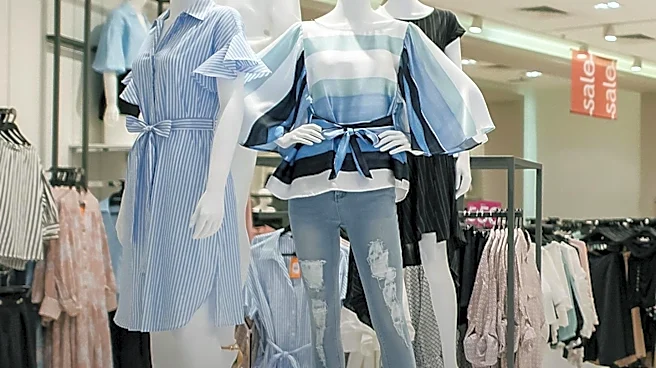
Zara's parent company, Inditex, which is headquartered in Spain, operates six distinct clothing brands, including Zara, Pull&Bear, Bershka, Stradivarius, Massimo Dutti, and Oysho. These brands cater to different customer segments and price points, ranging
from youth-oriented trends to adult tailoring and activewear. Inditex has achieved a gross margin of 58.3%, which is significantly higher than its competitors, H&M Group (53.4%) and Gap Inc. (40.8%). This success is attributed to a shared operating playbook across all brands, emphasizing fast turns, low upfront commitment, and a strategy that prioritizes full-price sales. The company also launched a digital platform in 2022 for Zara, allowing customers in 17 countries to resell used items and request basic alterations and repairs, further enhancing its sustainable practices and customer engagement.
Why It's Important?
Inditex's business model demonstrates a highly effective strategy for managing a diverse portfolio of brands under a single, efficient supply chain. This approach allows the company to cover a broader market spectrum without compromising profit margins. The ability to maintain high gross margins, significantly outperforming competitors like H&M and Gap Inc., highlights the strength of their operational efficiency and market responsiveness. The shared infrastructure, including distribution centers and manufacturing facilities, enables cost savings and faster adaptation to fashion trends. This model provides a blueprint for other multi-brand retailers seeking to optimize their operations and financial performance in a competitive global market. The integration of a resale and repair platform also signals a growing commitment to sustainability, which is increasingly important to consumers and can enhance brand loyalty and reputation.
What's Next?
Inditex is continuing to invest heavily in its distribution network, with approximately 900 million euros annually allocated to building out facilities for its various brands. This ongoing investment suggests a commitment to further enhancing its supply chain efficiency and capacity, which will likely support continued growth and market penetration. The success of its multi-brand, shared supply chain model may encourage other fashion retailers to re-evaluate their own operational strategies, potentially leading to a broader industry shift towards more integrated and efficient systems. The expansion of Zara's digital resale and repair platform could also set a precedent for other brands within the Inditex portfolio and the wider fashion industry, promoting a more circular economy for clothing.
Beyond the Headlines
The success of Inditex's strategy extends beyond mere financial performance; it reflects a deep understanding of consumer behavior and market segmentation. By offering distinct brand identities and price points, Inditex effectively caters to a wide range of consumer preferences, ensuring that there is a 'version of a brand that matches who they are and what they can spend.' This approach minimizes cannibalization between its own brands while maximizing overall market capture. The company's ability to maintain high margins despite operating multiple brands, unlike Gap Inc. where Old Navy has reportedly dragged down overall numbers, underscores the critical importance of effective brand management and operational execution within a shared infrastructure. This model highlights how strategic integration and a clear understanding of target demographics can lead to sustained competitive advantage in the fast-paced fashion industry.