



What's Happening?
The Chicago Cubs have activated right-handed pitcher Edward Cabrera from the 15-day injured list, with the intention of transitioning him into a relief role for the remainder of the season. Cabrera had been sidelined due to a recurring blister issue on his
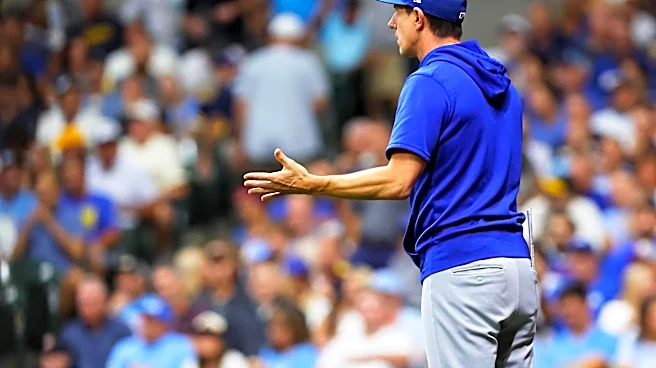
pitching hand, which has plagued him throughout the season, along with other injuries including a strained left adductor and hamstring. To make room on the active roster, right-hander Trent Thornton was placed on the 15-day IL due to left ankle soreness. Cubs manager Craig Counsell cited the example of Dodgers right-hander Roki Sasaki, who successfully transitioned to a bullpen role late last season and performed well in the playoffs, as a potential blueprint for Cabrera. Cabrera has made 15 starts this season, posting a 5.68 ERA with 67 strikeouts and 32 walks in 76 innings. His velocity showed an uptick during his recent rehab stint with Triple-A Iowa, with his fastball averaging around 97.8 mph, compared to 96.2 mph in the majors this year. Cabrera acknowledged that the move to the bullpen is a new experience and a work in progress.
Why It's Important?
This move is significant for the Chicago Cubs as they navigate a crucial part of their season with postseason aspirations. Edward Cabrera was acquired in a blockbuster trade with the Marlins with expectations of being a top-of-the-rotation starter. His inability to consistently perform due to injuries, particularly the recurring blister, has forced the team to adapt. Transitioning him to the bullpen is a strategic attempt to leverage his high-velocity arm in shorter bursts, potentially mitigating the blister issue and providing a much-needed boost to the Cubs' relief corps. If Cabrera can successfully adapt to this new role, it could provide a high-leverage option for the Cubs in critical late-game situations, similar to how Roki Sasaki performed for the Dodgers. However, the uncertainty surrounding his ability to adjust and manage his blister in a relief capacity presents a risk. The success of this transition could directly impact the Cubs' chances of making a deep playoff run, as a strong bullpen is often crucial in postseason baseball.
What's Next?
Edward Cabrera will now begin his tenure in the Cubs' bullpen, and his performance in this new role will be closely monitored. The team hopes that pitching fewer innings will help manage his recurring blister problem, allowing him to contribute more consistently. Manager Craig Counsell has indicated that the team needs to be open to discomfort and make necessary adjustments at this point in the season to achieve their goals. Cabrera will need to adapt his routine and mindset to the demands of relief pitching, which differs significantly from starting. His initial outings will be crucial in determining his effectiveness and how he fits into the bullpen hierarchy. The Cubs will be looking for signs of improved command and sustained velocity without the recurrence of his blister issues. The team's overall bullpen strategy and effectiveness in high-leverage situations will depend, in part, on Cabrera's ability to successfully transition and perform in this new capacity as they push for a playoff spot.
Beyond the Headlines
The decision to move Edward Cabrera to the bullpen highlights the ongoing challenge baseball teams face in managing pitcher health, particularly with high-velocity arms. Blister issues, while seemingly minor, can significantly derail a pitcher's season and career trajectory. This move represents a pragmatic approach by the Cubs to salvage value from a highly touted acquisition who has struggled with health. It also underscores the evolving role of starting pitchers in modern baseball, where many are now being asked to transition to relief roles, either due to injury, performance, or strategic team needs. The comparison to Clayton Kershaw closing out a playoff series, as mentioned by Counsell, emphasizes the growing flexibility and willingness of teams to deploy their best arms in unconventional roles during critical moments. This trend reflects a broader shift in baseball strategy, prioritizing optimal performance and availability over traditional roles, especially as teams seek any advantage in the competitive playoff race. The long-term impact on Cabrera's career, whether he eventually returns to a starting role or solidifies himself as a dominant reliever, remains to be seen.




