


What's Happening?
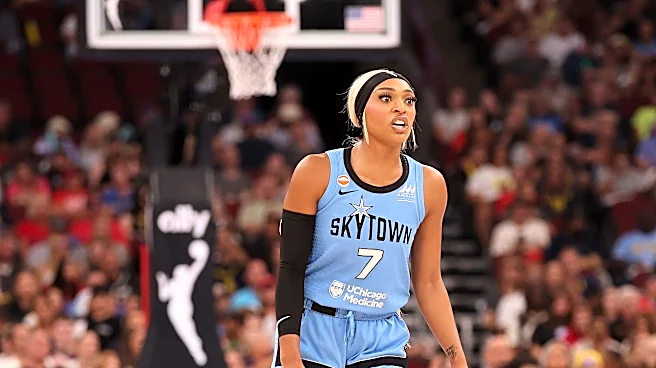
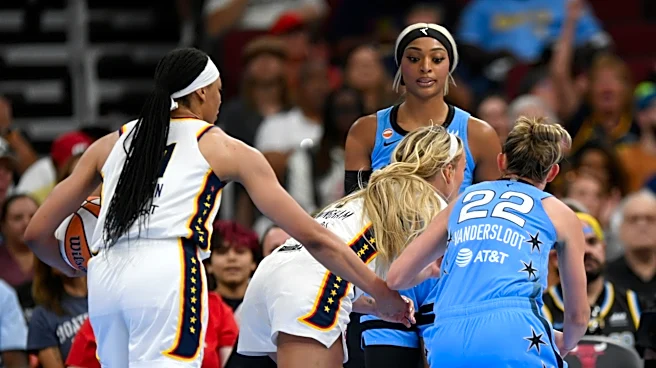
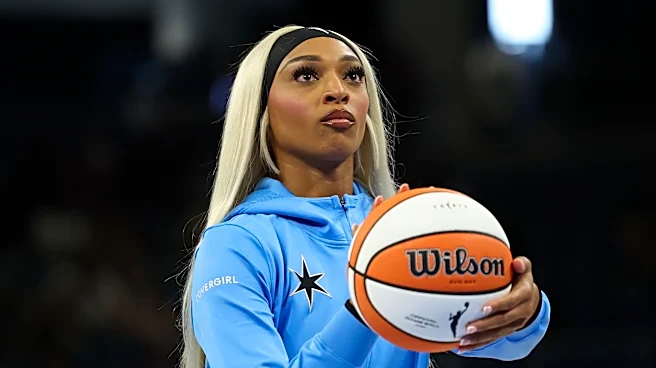
DiJonai Carrington, a guard for the Chicago Sky, has responded to criticism following her ejection from a WNBA game against the Indiana Fever. Carrington was penalized for a hard foul on Sophie Cunningham and subsequently posted 'white privilege' on social
media, tagging the Indiana Fever. Her post has sparked debate, with critics, including former NFL player Emmanuel Acho, arguing that the foul was not racially motivated. Carrington has defended her comments, urging critics to research the concept of white privilege and asserting that her post was not intended to undermine the term.
Why It's Important?
Carrington's comments have brought attention to the intersection of race and sports, highlighting how social issues can influence perceptions of fairness and justice in athletic contexts. The incident underscores the ongoing dialogue about racial dynamics in professional sports, where athletes often use their platforms to address broader societal issues. This situation also reflects the challenges athletes face when navigating public discourse on sensitive topics, as their statements can provoke significant public and media scrutiny. The response to Carrington's post illustrates the complexities of discussing race and privilege in a highly visible and competitive environment.
What's Next?
The WNBA and its teams may need to address the broader implications of Carrington's comments and the ensuing debate. This could involve discussions on how the league supports players in expressing their views on social issues while maintaining a focus on sportsmanship and fair play. The incident may also prompt further conversations within the league about diversity, equity, and inclusion, potentially leading to initiatives aimed at fostering a more inclusive environment. As the dialogue continues, stakeholders, including players, fans, and advocacy groups, will likely engage in ongoing discussions about race and privilege in sports.