



What's Happening?
Hong Kong is undergoing a significant transformation, being repurposed by Beijing as an offshore financial platform for a still-controlled Chinese financial system, rather than experiencing a decline as a Western-style financial center. This strategy
allows China to gain the benefits of financial openness without relinquishing sovereign control over its capital account. Mainland capital flows into Hong Kong through 'Connect' channels, which are closed-loop systems where eligible assets, settlement, and use of proceeds are supervised by Beijing. This mechanism deepens Hong Kong's offshore financial ecosystem by providing liquidity, intermediaries, renminbi funding, and internationally credible markets. The goal is to project China's financial reach outward, creating a robust offshore market that remains within China's sovereign perimeter while leveraging Hong Kong's common-law jurisdiction, convertible currency, and global financial infrastructure.
Why It's Important?
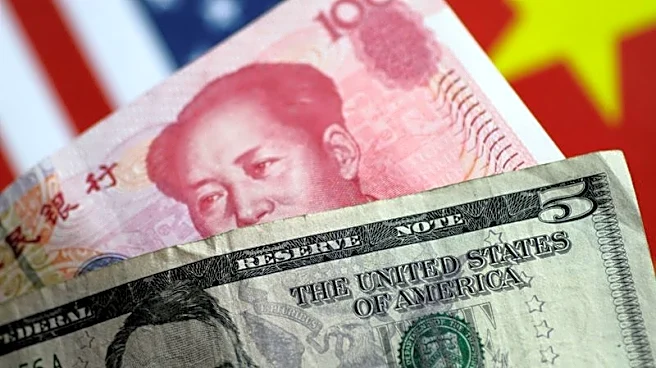
This strategic repurposing of Hong Kong has profound implications for global finance and U.S. financial leverage. By creating a controlled yet internationally credible offshore hub, China aims to reduce its dependence on American financial infrastructure and potentially weaken the reach of American financial power. The increasing flow of mainland savings into Hong Kong deepens its liquidity and strengthens its role as an offshore financial center, particularly for renminbi services and cross-border wealth. While international investors remain crucial for major transactions and global banks play a significant distribution role, the momentum is increasingly tied to Chinese clients and issuers. This shift challenges the traditional dominance of the U.S. dollar system by building alternative financial rails, which could lead to a more multi-currency global financial landscape and diminish the effectiveness of U.S. sanctions or financial restrictions.
What's Next?
The next five years will be critical in determining the success of Beijing's strategy. The most likely path is a 'managed expansion,' where Hong Kong's role deepens, and more financial activity migrates onto renminbi and Chinese financial rails, with independent foreign demand growing slowly. Washington is advised to avoid treating Hong Kong as a fading asset and instead focus on strengthening the dollar's competitive position, for example, by prioritizing wholesale tokenized settlement and supporting deeper Asian dollar-clearing capacity. Targeted leverage, rather than systemic sanctions, is recommended to avoid accelerating migration away from dollar rails. Assessing spillovers before implementing measures and coordinating with allies are also crucial steps. Beijing's continued efforts to build infrastructure and shift financial activity onto its own systems mean the U.S. needs to compete on the strength of its financial system rather than hoping China's model fails.
Beyond the Headlines
The paradox at the core of this strategy is Hong Kong's continued reliance on its currency peg to the U.S. dollar, which provides a freely convertible currency anchor and access to dollar liquidity. Beijing preserves this peg even while building around it, creating a financial system with a dollar foundation but progressively more multi-currency and renminbi-capable activity. This dynamic means U.S. leverage over Hong Kong remains real, stemming from the dependence of Hong Kong's financial institutions on access to the wider dollar-clearing network. However, this leverage could diminish over time as more financial functions become possible without direct dollar access. The long-term implications include a potential fragmentation of the global financial system, with increased competition between dollar-centric and renminbi-centric financial ecosystems, and a re-evaluation of international financial power dynamics.