






What's Happening?
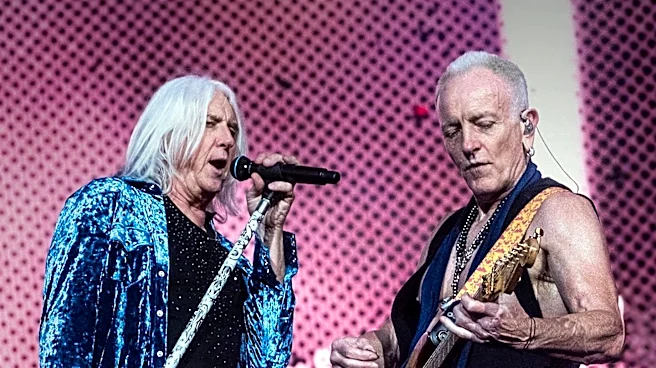
Journey, the iconic classic rock band, has announced their 'Final Frontier Tour' for 2026, which is being billed as their farewell to extensive touring. The tour is scheduled to run from February 28, starting in Hershey, Pennsylvania, and will conclude
on November 28 in San Francisco, the band's hometown. This North American leg will encompass 60 cities initially, with an additional 40 dates added, bringing the total to 100 cities. The tour will feature an all-new stage production. Journey has been performing for over five decades, consistently filling stadiums and arenas. The announcement comes as other major artists like Rush, Harry Styles, and Olivia Rodrigo also have significant tours planned for 2026, indicating a busy year for live music.
Why It's Important?
The 'Final Frontier Tour' holds significant importance for the music industry and fans, as it marks the potential end of large-scale touring for one of rock's most enduring acts. This could lead to a surge in ticket demand, as fans seek to experience the band live for what might be the last time on such an extensive tour. For the live music sector, farewell tours often generate substantial revenue, impacting ticketing platforms, venue operations, and local economies in the cities where shows are held. The tour's extensive schedule across North America also highlights the continued viability of classic rock acts in drawing large audiences, even as newer artists emerge. The retirement of such a prominent band from touring could also open up opportunities for other artists to fill the void in the touring circuit.
What's Next?
Following the announcement, fans can anticipate a high demand for tickets as the tour dates approach. The initial leg of the tour will conclude in July, with the additional 40 dates extending through November. Reviews of their Washington, D.C. concert are already available, providing a glimpse into the tour's production and performance quality. The band's decision to end extensive touring may lead to speculation about their future activities, such as potential residencies or less frequent, more localized performances. The success of this farewell tour will likely be closely watched by other veteran artists considering their own touring futures, potentially influencing trends in the live music industry regarding legacy acts.
Beyond the Headlines
The 'Final Frontier Tour' taps into a broader cultural phenomenon of farewell tours by long-standing musical acts. These tours often serve as a moment of collective nostalgia and celebration for generations of fans, transcending mere musical performance to become significant cultural events. The emotional resonance of a band like Journey, known for anthems like 'Don't Stop Believin',' saying goodbye to extensive touring can evoke a sense of an era ending. This trend also raises questions about the sustainability of rigorous touring schedules for older artists and the evolving expectations of both performers and audiences in the modern music landscape. The tour's impact extends beyond economics, touching on the legacy of the band and its place in American music history.