







What's Happening?
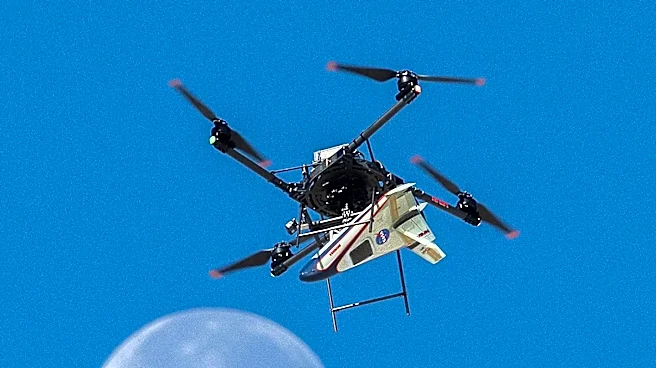
NASA's University Student Research Challenge (USRC) has been instrumental in fostering entrepreneurial talent among engineering students, as exemplified by Gavin Gardner, a former Michigan State University student. Gardner, along with his team, participated
in two USRC grants, focusing on next-generation drone technology. Initially, their research involved developing drones for intra-city delivery, proposing a concept where drones would 'hitchhike' on public transportation to charge batteries during transit. Although this commercial venture was not pursued due to regulatory complexities, the team's technical prowess led to a second USRC award for the Laser Energized Aerial Drone System (LEADS), which explored laser-based power transfer to drones in flight. These experiences, particularly in navigating the financial and promotional aspects of research, laid the groundwork for Gardner and his USRC alumni teammates to found AG3 Labs in 2024. This company specializes in manufacturing drones for military training exercises, demonstrating a direct link between NASA's academic initiatives and real-world business creation.
Why It's Important?
This initiative highlights NASA's role not only in scientific and aeronautical advancement but also in cultivating a future workforce equipped with both technical and entrepreneurial skills. By integrating business acumen into engineering challenges, the USRC program addresses a critical gap in traditional technical education. The success of AG3 Labs, which now produces thousands of drones monthly for military training, showcases the tangible economic impact of such programs. It demonstrates how government-funded research and development can directly lead to the creation of new businesses, job opportunities, and innovative solutions for various sectors, including defense. This model of fostering entrepreneurship through academic challenges could serve as a blueprint for other federal agencies looking to maximize the societal and economic returns on their research investments, ultimately strengthening the U.S. innovation ecosystem and contributing to national security through advanced technological capabilities.
What's Next?
The continued success of USRC alumni like Gavin Gardner is expected to inspire more students to participate in NASA's programs, further expanding the pool of technically skilled and entrepreneurially minded individuals. NASA USRC manager Steven Holz anticipates that more teams will leverage these opportunities as launchpads for their own innovative careers. AG3 Labs, having secured initial contracts with the U.S. Army, is likely to continue expanding its operations and production capabilities, potentially leading to further advancements in drone technology for military applications. The program's emphasis on both technical and business skills suggests a future where more NASA-supported research translates into commercial ventures, contributing to the U.S. economy and technological leadership. Future iterations of the USRC may further refine their curriculum to enhance the entrepreneurial training component, ensuring that participants are well-prepared for the challenges of starting and scaling a technology-driven business.
Beyond the Headlines
The story of AG3 Labs underscores a broader shift in how scientific and engineering research is being translated into practical applications and economic value. It highlights the importance of interdisciplinary education that combines rigorous technical training with essential business and communication skills. The initial hesitation to pursue a commercial drone venture due to regulatory complexities also points to the significant role of policy and regulation in shaping innovation. While the team found a niche in military training, the broader commercial drone market remains a complex landscape. This case study could inform discussions on how to create more conducive regulatory environments for emerging technologies, allowing for greater commercialization of research. Furthermore, it exemplifies the 'dual-use' nature of many advanced technologies, where innovations developed for civilian or academic purposes can also find critical applications in defense and national security.