




What's Happening?
Alphabet's Intrinsic has introduced a new modular, software-first robotic workcell design powered by IntrinsicOS, aimed at simplifying industrial automation. This platform replaces complex robot coding with a drag-and-drop automation system, making it more
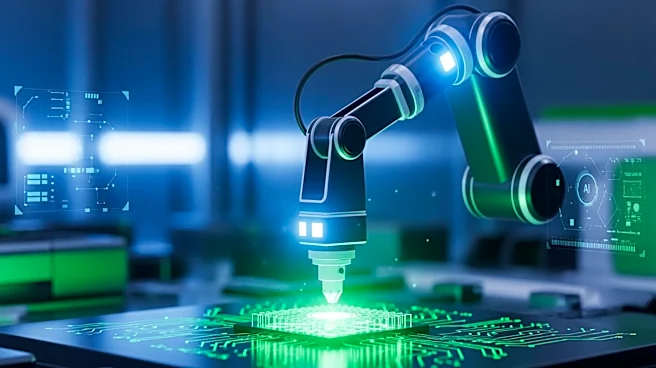
accessible for various industries. The Intrinsic Intelligence Cell, showcased at Automate 2026, demonstrates the potential for AI-infused production applications in settings ranging from factories to machine shops. The workcell, featuring a FANUC robot, is designed to perform electronic assembly tasks, leveraging AI for skills-based automation. Intrinsic is collaborating with CNC system integrators like Trinity Automation and MartinSystems to integrate AI capabilities into their products, enhancing ease of use on the shop floor. Additionally, Intrinsic has launched the AI for Industry Challenge in partnership with Open Robotics, encouraging global developers to solve complex electronics assembly problems using AI, with a significant prize pool to incentivize participation.
Why It's Important?
The introduction of Intrinsic's AI-driven robotic workcell represents a significant shift in industrial automation, potentially reducing the complexity and cost of implementing robotic solutions in manufacturing. By democratizing access to advanced robotics through simplified programming, Intrinsic is enabling smaller companies to adopt automation technologies that were previously out of reach. This could lead to increased efficiency and productivity across various sectors, particularly in electronics assembly, where the challenge of dextrous manipulation of components is prevalent. The global AI for Industry Challenge further highlights the growing interest and potential for software engineers to contribute to advancements in robotics, potentially leading to innovative solutions and new industry standards.
What's Next?
As Intrinsic prepares for a major manufacturing pilot with Foxconn later this year, the success of this initiative could pave the way for broader adoption of AI-driven automation in manufacturing. The outcomes of the AI for Industry Challenge will likely influence future developments in robotics, as successful solutions could be integrated into commercial applications. Stakeholders in the manufacturing and technology sectors will be closely monitoring these developments, as they could impact competitive dynamics and drive further innovation in industrial automation.