





What's Happening?
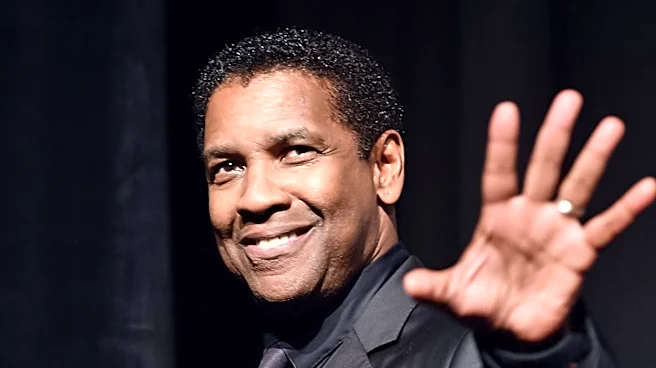
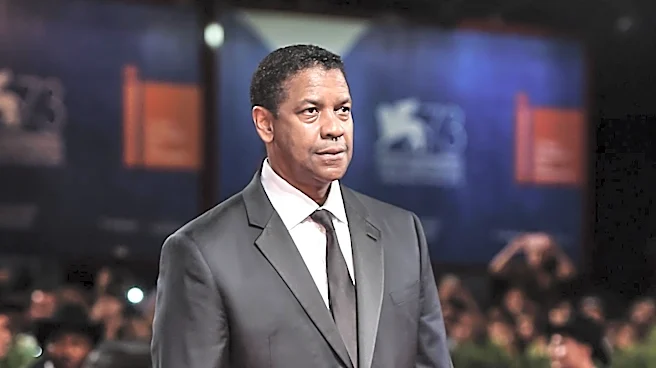
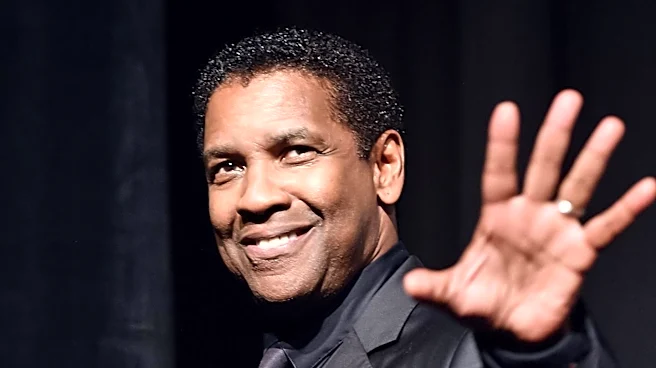
Denzel Washington's performance in the film 'Malcolm X' has been recognized as one of the best portrayals in cinematic history. This acknowledgment places his work alongside other critically acclaimed biographical performances, such as Jamie Foxx's role
in 'Ray' and Val Kilmer's depiction of Jim Morrison in 'The Doors'. The discussion also includes more recent biographical projects like Jaafar Jackson's upcoming portrayal of Michael Jackson and Anthony Ippolito's role in 'I Play Rocky'. This recognition underscores the significant impact and lasting legacy of Washington's acting career, particularly his ability to embody complex historical figures with depth and authenticity. The film 'Malcolm X', directed by Spike Lee, is widely regarded as a landmark in American cinema, and Washington's central performance is often cited as a career-defining moment.
Why It's Important?
The continued recognition of Denzel Washington's performance in 'Malcolm X' is important for several reasons within the entertainment industry and broader cultural discourse. It reinforces the film's status as a significant cultural artifact that accurately and powerfully depicts a pivotal figure in American history. For Washington, it solidifies his reputation as one of the most respected and talented actors of his generation, influencing aspiring actors and filmmakers. Such accolades also draw renewed attention to the historical context and themes explored in 'Malcolm X', encouraging new audiences to engage with the story of civil rights and social justice. Furthermore, it highlights the enduring power of biographical films to educate and inspire, showcasing how compelling performances can bring historical narratives to life for contemporary viewers.
Beyond the Headlines
Beyond the immediate recognition of Denzel Washington's acting prowess, the enduring impact of 'Malcolm X' and his performance speaks to deeper cultural and ethical considerations in filmmaking. The film's ability to resonate decades after its release underscores the ongoing relevance of its themes, particularly concerning racial identity, activism, and systemic injustice in the United States. Washington's portrayal is not merely an imitation but an interpretation that captures the essence and complexity of Malcolm X, prompting viewers to reflect on historical events and their contemporary echoes. This kind of cinematic achievement can foster critical dialogue and contribute to a more nuanced understanding of American history, demonstrating how art can serve as a powerful tool for social commentary and historical preservation.