



What's Happening?
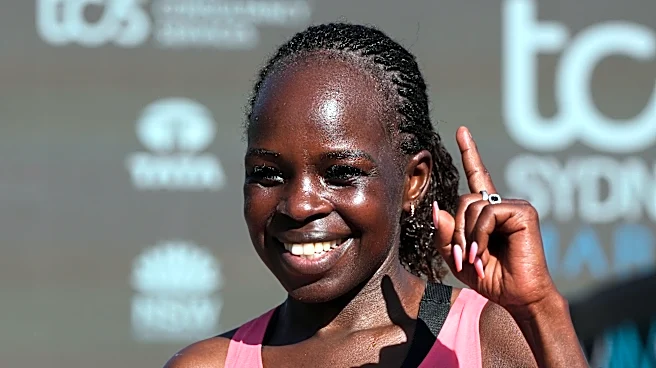
The Athletics Integrity Unit (AIU) has suspended Kenyan runner Peres Jepchirchir for three years due to a doping violation. Jepchirchir, 33, admitted to the infraction and accepted the annulment of all her results from July 17, 2026, which includes her victory
in the Sydney Marathon on August 30, 2026. The positive test for erythropoietin (EPO), a substance that enhances physical endurance by stimulating red blood cell production, was detected in a sample taken in Kenya before the Sydney race. Although a second sample taken on the day of the marathon in Sydney tested negative for EPO, Jepchirchir's admission led to the reduced three-year ban, down from an initial four years. The suspension began on October 20, 2026, and will conclude on October 19, 2029, effectively barring her from participating in the Los Angeles 2028 Olympic Games. Following her disqualification, the Sydney Marathon announced that Irine Cheptai, also from Kenya, who finished second, will be recognized as the 2026 winner, pending a 30-day appeal period.
Why It's Important?
This doping ban significantly impacts Peres Jepchirchir's career and the integrity of international marathon running. Her lifetime ban from the World Marathon Majors circuit, which includes races she previously won in New York (2021), Boston (2022), and London (2024), underscores the strict anti-doping policies in elite athletics. While she retains her Olympic gold from Tokyo 2020 (held in 2021) and her 2025 World Marathon title, the current suspension tarnishes her reputation and serves as a stark warning to other athletes about the consequences of performance-enhancing drugs. The decision to reassign the Sydney Marathon title to Irine Cheptai highlights the commitment of athletic organizations to uphold fair play and ensure that clean athletes receive due recognition. This incident reinforces the ongoing battle against doping in sports and its critical importance for maintaining public trust and competitive fairness.
What's Next?
Peres Jepchirchir's three-year suspension will prevent her from competing in any major international events, including the Los Angeles 2028 Olympic Games. The formal modification of the Sydney Marathon results, recognizing Irine Cheptai as the winner, is subject to a 30-day appeal period. Should no appeal be filed or if it is unsuccessful, Cheptai will officially be declared the champion. Jepchirchir will also remain banned for life from the World Marathon Majors circuit, impacting her future participation in prestigious races. Her return to competitive running will not be possible until after October 19, 2029, by which time she will be 36 years old, potentially affecting her ability to compete at an elite level.
Beyond the Headlines
The case of Peres Jepchirchir brings to light the persistent challenges of doping in athletics, particularly in endurance sports where EPO can offer a significant advantage. The AIU's decision to reduce her ban from four to three years after her admission of guilt suggests a policy that encourages cooperation, yet the lifetime ban from World Marathon Majors indicates a zero-tolerance stance for serious infractions. This incident could prompt further scrutiny of anti-doping measures and testing protocols, especially in regions known for high-performance athletes. It also raises questions about the pressures athletes face to perform and the support systems in place to prevent doping. The long-term implications for Jepchirchir extend beyond her athletic career, potentially affecting her endorsements and public image, and serving as a cautionary tale for aspiring athletes.