


What's Happening?
Angola is stepping up to address global supply chain vulnerabilities by increasing its production of primary aluminum and nitrogen fertilizers. This move comes as global markets face shortages of critical materials, including aluminum, fertilizers, sulfur,
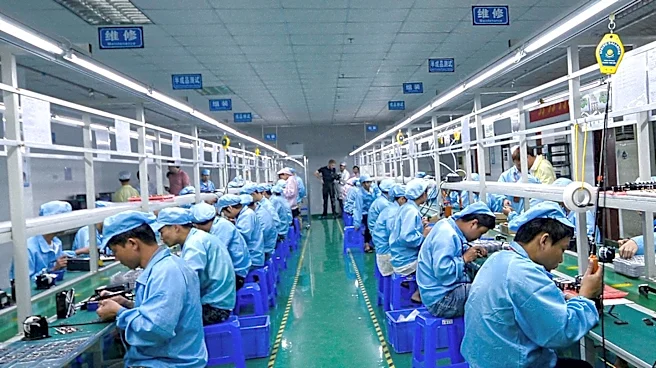
and helium, exacerbated by disruptions such as the closure of the Strait of Hormuz. The Gulf region typically supplies a significant portion of the world's primary aluminum (9%) and seaborne fertilizers (up to 30%), with Qatar alone accounting for about one-third of global helium. Angola's Huatong plant in Barra do Dande, inaugurated on January 15, is already producing 240 tonnes of aluminum daily, with plans for expansion. Additionally, a new 400-million-cubic-feet-per-day natural gas processing plant in Soyo, operational since late 2025, is feeding the construction of the Amufert ammonia-urea complex. This $2 billion facility, expected to start in late 2027, will produce approximately 4,000 tonnes of urea daily, covering Angola's domestic needs and providing a surplus for export.
Why It's Important?
Angola's emergence as a producer of aluminum and fertilizers offers a crucial alternative for Western governments seeking to diversify supply chains away from China and the Gulf. The U.S. and European nations have been urging such diversification for years, and Angola provides a non-Chinese source of primary aluminum outside Asia and nitrogen fertilizer rooted in Atlantic gas, rather than Middle Eastern politics. This development is significant because disruptions in the supply of these commodities can impact various U.S. industries, from military hardware and electric vehicles (reliant on aluminum) to agriculture (dependent on fertilizers). While Angola's output may be small compared to Gulf giants, every marginal supplier becomes vital during a crisis, helping to ease pressure on fabricators and farmers. Strategic stockpiles and long-term contracts with new suppliers like Angola could enhance resilience against future supply shocks, providing a form of 'supply-chain insurance' for Western economies.
What's Next?
Angola plans to continue expanding its production capacity for both aluminum and fertilizers. The Huatong plant aims for a phase one target of 120,000 tonnes of aluminum per year, with further expansion planned. The Amufert ammonia-urea complex is expected to commence operations in late 2027, significantly boosting fertilizer output. The Angolan government, through its state oil company Sonangol, is actively pursuing diversification into battery materials and fertilizers, leveraging hydrocarbon rents to reduce dependence on oil. While challenges such as underdeveloped ports and rail lines exist, projects like the Lobito corridor are expected to improve logistics. Policymakers in the U.S. and Europe are likely to explore opportunities for strategic partnerships and long-term contracts with Angola to secure these critical resources, further strengthening supply chain resilience. The success of these projects could encourage other resource-rich nations to pursue similar value-added processing initiatives.
Beyond the Headlines
Angola's strategic shift towards downstream processing of its natural resources represents a broader trend among developing nations to move beyond raw material extraction and climb the value chain. This initiative not only creates jobs and industrial wages but also reduces the country's exposure to volatile oil prices, fostering greater economic stability. The involvement of Chinese capital in the smelter and African financial institutions in the fertilizer plant highlights a pragmatic approach to development, utilizing diverse funding sources. From a global perspective, Angola's efforts challenge the notion that African industrialization is merely 'wishful thinking,' demonstrating that with aligned policy, capital, and geology, resource-rich states can become significant players in global manufacturing. This development could inspire other African nations to pursue similar strategies, potentially reshaping global trade patterns and fostering more diversified and resilient supply networks worldwide. The crisis in the Strait of Hormuz serves as a stark reminder of the fragility of concentrated supply chains and the imperative for alternative sources.