



What's Happening?
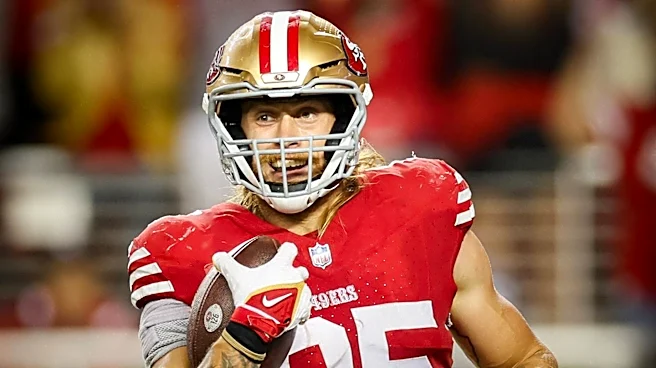
San Francisco 49ers tight end George Kittle has issued an apology to Harrison Rich, a 22-year-old reporter for the San Francisco Chronicle, after an earlier interaction where Kittle expressed surprise and a humorous sense of feeling old upon learning
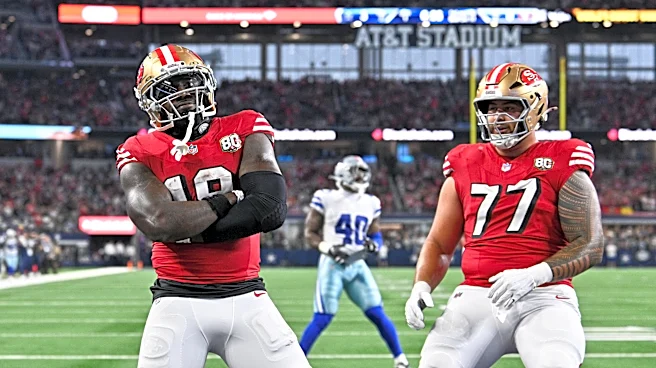
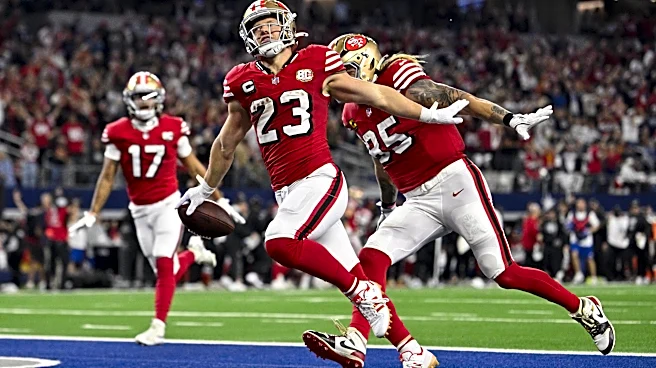
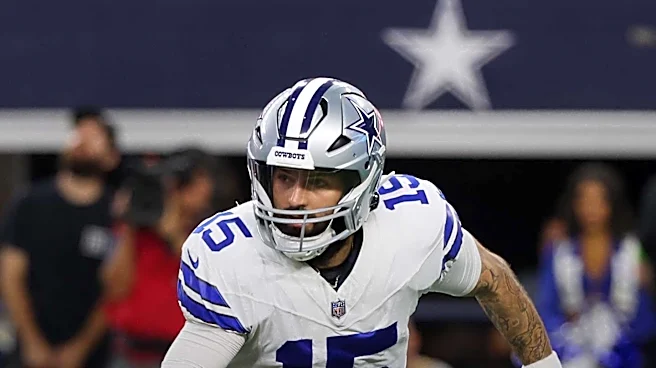
Rich's age. The initial exchange occurred days before the 49ers' 46-40 victory over the Dallas Cowboys, when Kittle asked Rich his age and reacted with an 'oh jeez' and a sigh upon hearing he was 22, having been born in 2004. Kittle later apologized at a press conference, explaining that his reaction was rooted in his own experience as a rookie when veteran Joe Staley reacted similarly to Kittle's age of 23. Kittle clarified that he was being sarcastic and that he frequently encounters young players now, making him feel older. Rich, who covers the 49ers as the Chronicle's football trending reporter, has a notable background, having graduated from Maryland's Philip Merrill College of Journalism and written for various publications including The Washington Post and Sports Business Journal.
Why It's Important?
This incident, while seemingly minor, highlights the evolving landscape of sports journalism and the generational shifts within professional environments. George Kittle's humorous, yet publicly acknowledged, reaction to a young reporter's age underscores the increasing presence of highly accomplished young professionals in fields traditionally dominated by older individuals. For athletes, this can lead to a relatable sense of 'feeling old' as their careers progress and new generations enter the workforce. Kittle's apology demonstrates a commitment to maintaining positive relationships with the media, which is crucial for athletes and sports organizations. It also subtly points to the high level of talent and experience that young journalists like Harrison Rich bring to their roles, challenging traditional perceptions of age and experience in the industry. The interaction serves as a reminder of the importance of respectful communication in all professional settings.
What's Next?
The immediate consequence of Kittle's apology is likely to be a strengthened professional relationship with Harrison Rich and a positive public perception for Kittle. This event could set a precedent for how veteran athletes interact with younger media members, encouraging more open and respectful dialogue. For Rich, the incident has brought some attention to his work and his early career accomplishments. The 49ers' season will continue, with Kittle remaining a key player and leader. This lighthearted exchange may become a memorable anecdote in the ongoing narrative of Kittle's career, further solidifying his reputation as an engaging and personable athlete. It also subtly highlights the increasing professionalism and talent of young journalists entering the sports media landscape.
Beyond the Headlines
This interaction delves into the broader societal theme of generational differences and the perception of age in professional careers. Kittle's reaction, though humorous, reflects a common human experience of realizing the passage of time and the emergence of new, younger talent. It also subtly showcases the accelerated career paths available today, where individuals like Rich are achieving significant professional roles at a very young age. This can lead to a re-evaluation of what constitutes 'experience' and 'expertise' in various fields. The incident also underscores the importance of empathy and understanding across different age groups in the workplace, even in high-profile environments like professional sports. It's a small but telling example of how personal interactions can reflect larger cultural shifts and perceptions of age and achievement.