






What's Happening?
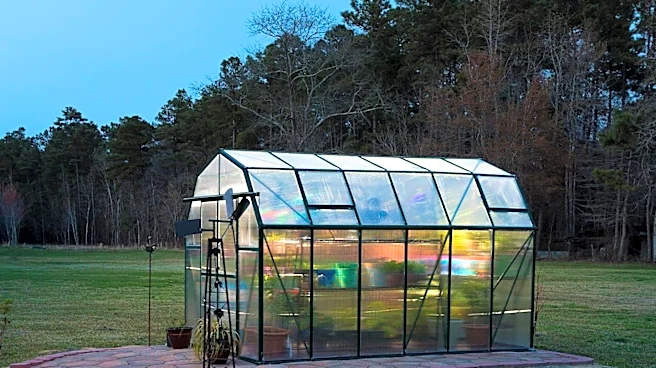
Kwekerij Aarts, a plant nursery, has installed a 2 MW air-to-water heat pump to support a new 3.6-hectare greenhouse, marking a significant shift in energy use within the greenhouse sector. The system, one of the largest of its kind, uses CO₂ as a natural
refrigerant, chosen for its non-harmful properties to plants in case of leaks. Owner Rens Aarts explored various options before selecting this system, which operates with a steady return temperature of 30°C, allowing flexible output levels. The setup is complemented by solar panels and an additional combined heat and power (CHP) unit, managed by smart software to ensure consistent performance despite weather and electricity supply fluctuations. This innovative approach is part of the nursery's expansion, which already includes 9.6 hectares for cucumbers and autumn tomatoes.
Why It's Important?
The implementation of this advanced heating system by Kwekerij Aarts represents a significant move towards sustainable horticulture, potentially setting a precedent for other growers. By opting for a natural refrigerant like CO₂, the nursery not only reduces potential environmental harm but also aligns with broader sustainability goals. This development could influence energy policies within the agricultural sector, encouraging more growers to adopt similar technologies. The system's ability to maintain efficiency and flexibility under varying conditions could lead to reduced energy costs and increased productivity, benefiting the agricultural economy and contributing to environmental conservation efforts.
What's Next?
As interest from other growers increases, Kwekerij Aarts may inspire further adoption of similar technologies across the horticulture industry. The nursery plans for future expansion, which could involve scaling up the current system or integrating additional sustainable technologies. This move could prompt discussions among policymakers and industry leaders about supporting such innovations through incentives or subsidies. The success of this project might also lead to collaborations with technology providers to enhance the system's capabilities and efficiency further.
Beyond the Headlines
The adoption of CO₂ as a refrigerant in greenhouse heating systems highlights a broader trend towards using environmentally friendly technologies in agriculture. This shift could lead to long-term changes in how energy is consumed in the sector, potentially reducing the carbon footprint of agricultural operations. Additionally, the integration of smart software to manage energy use efficiently could pave the way for more data-driven approaches in agriculture, optimizing resource use and improving crop yields. These developments may also influence consumer perceptions, increasing demand for sustainably grown produce.