



What's Happening?
A range of new desk gadgets is emerging to improve the productivity and enjoyment of the workday for U.S. workers. These devices are designed to reduce clutter, enhance focus, and add convenience to daily tasks, whether working from home or in an office.
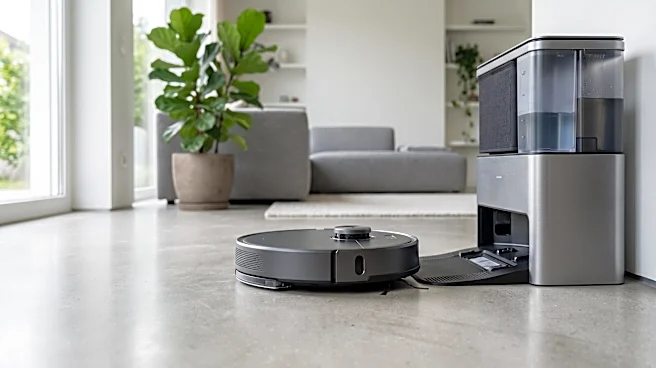
Among the highlighted gadgets are the Nanoleaf Pegboard Desk Dock, which combines customizable RGB lighting, a pegboard organizer, and a USB hub. The Elgato Stream Deck Mini offers programmable LCD buttons for workflow simplification. For cable management, the Mount-It! Under Desk Cable Management Tray helps keep workspaces tidy. The Mind Reader Monitor Stand elevates screens for ergonomic viewing and provides storage. The Anker Nano Charging Station consolidates charging for multiple devices, and the Logitech Lift Vertical Ergonomic Wireless Mouse aims to reduce wrist strain. Other innovations include the Odistar Desktop Vacuum Cleaner for cleanliness, the Ember Mug 2 for maintaining beverage temperature, the Amazon Echo Dot for hands-free assistance, and Govee Glide Hexa Light Panels for ambient lighting and personalization. Speks, tiny magnets, are also suggested as fidget toys to aid focus and stress relief.
Why It's Important?
The increasing focus on desk gadgets reflects a broader trend in the U.S. workforce towards optimizing remote and hybrid work environments. As many Americans spend significant hours at their desks, these tools can directly impact employee well-being, efficiency, and job satisfaction. Ergonomic solutions like monitor stands and vertical mice address common health issues associated with prolonged computer use, potentially reducing healthcare costs and improving long-term productivity. Smart devices like the Ember Mug and Echo Dot integrate technology into daily routines, streamlining tasks and enhancing comfort. The emphasis on clutter reduction and personalized lighting also speaks to the psychological impact of a well-organized and aesthetically pleasing workspace on mental clarity and focus. For businesses, investing in such gadgets for employees could lead to increased output and reduced absenteeism, while for consumers, these products offer tangible improvements to their daily work lives.
What's Next?
The market for desk gadgets is expected to continue expanding, driven by ongoing remote work trends and technological advancements. Manufacturers will likely introduce more integrated and AI-powered solutions that anticipate user needs and adapt to individual work styles. We may see further development in ergonomic designs, smart home integration for office environments, and sustainable gadget options. Retailers will continue to offer promotions, especially during peak shopping seasons like Black Friday, to attract consumers looking to upgrade their home or office setups. The adoption of these gadgets could also influence office design, with companies potentially incorporating similar technologies into their physical workspaces to create more appealing and productive environments for returning employees. User feedback and reviews will play a crucial role in shaping the next generation of desk productivity tools.
Beyond the Headlines
Beyond immediate productivity gains, the proliferation of desk gadgets highlights a cultural shift towards hyper-personalization and optimization of individual workspaces. This trend reflects a desire for greater control over one's immediate environment, especially in an era where work and personal life often intertwine within the same physical space. The integration of smart devices also raises questions about data privacy and security, as more personal and professional information flows through interconnected gadgets. Furthermore, the emphasis on 'hustle culture' and constant productivity, even through gadgetry, could inadvertently contribute to burnout if not balanced with healthy work-life boundaries. The environmental impact of manufacturing and disposing of an increasing number of electronic devices also becomes a more significant consideration, prompting a need for greater sustainability in tech production and consumption.