



What's Happening?
The Detroit Lions are undergoing significant changes in their offensive line for the 2026 season. With the departure of left tackle Taylor Decker and the shift of right tackle Penei Sewell to the left side, rookie Blake Miller will fill Sewell's previous
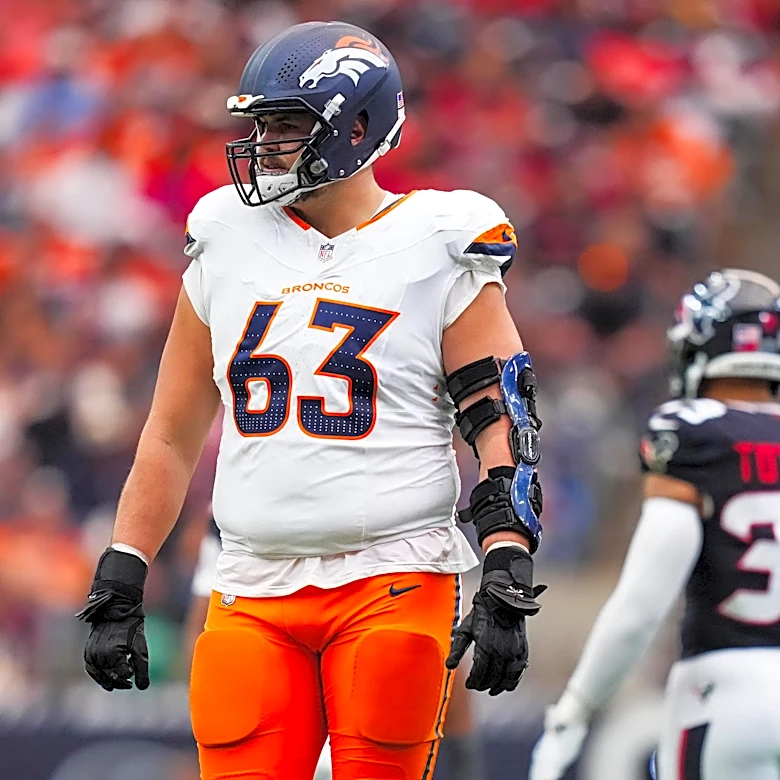
position. At the center, Cade Mays steps in as a new addition. Among these changes, second-year right guard Tate Ratledge remains in his position, expected to make a substantial leap in performance. NFL.com writer Nick Shook has highlighted Ratledge as a player poised for improvement, citing his resilience in the 2025 season despite challenging circumstances. Ratledge finished the previous season with a 70.3 grade on Pro Football Focus, ranking 24th among eligible guards. His pass-blocking grade improved significantly towards the end of the season, suggesting potential for further development.
Why It's Important?
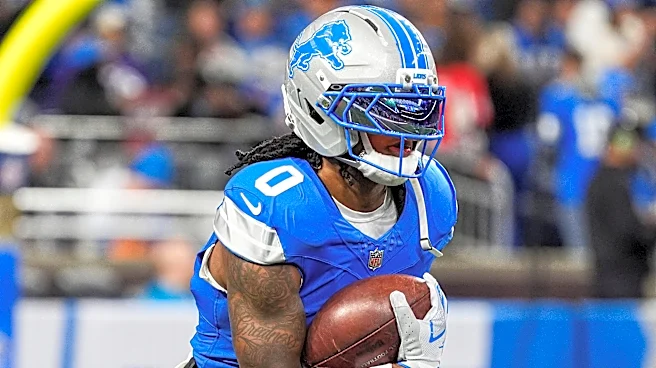
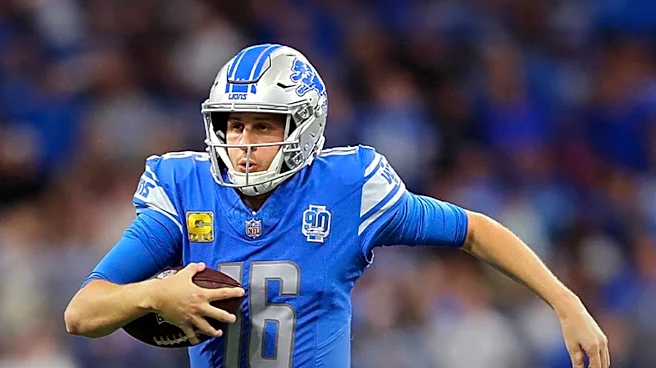
The anticipated improvement of Tate Ratledge is crucial for the Detroit Lions as they aim to enhance their offensive line's performance. A stronger line can provide better protection for quarterback Jared Goff and create more opportunities for running back Jahmyr Gibbs. Ratledge's development could also contribute to the overall stability and effectiveness of the line, especially with the introduction of new players like Cade Mays and Blake Miller. If Ratledge continues to improve, he could become a key player in the Lions' strategy, potentially leading to Pro Bowl or even All-Pro considerations. This progress is vital for the Lions as they seek to reclaim their competitive edge in the NFC North.
What's Next?
As the 2026 season approaches, the Detroit Lions will focus on integrating their new offensive line configuration. The team will likely monitor the chemistry between Ratledge and rookie Blake Miller, who will be playing alongside him. The Lions' coaching staff will aim to capitalize on Ratledge's late-season improvements and ensure that the line's performance supports the team's offensive strategy. The success of these changes could significantly impact the Lions' performance in the upcoming season, with potential implications for their standing in the NFC North.