




What's Happening?
Texas Instruments (TI) has announced the release of two new devices aimed at improving seamless interoperability within increasingly complex factory automation, robotics, and Industrial Internet of Things (IIoT) systems. These new offerings include a multiprotocol
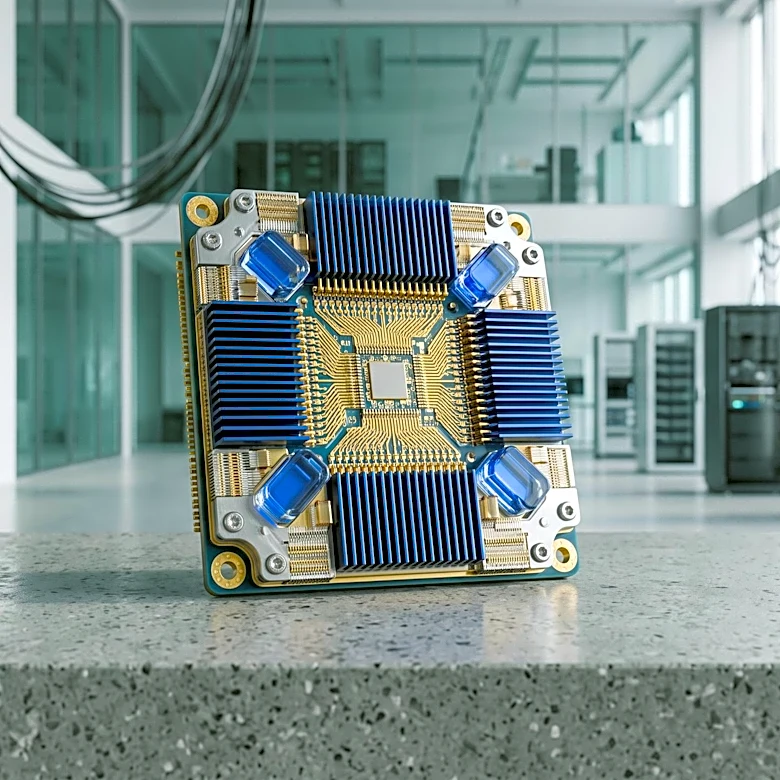
communications system-on-module (SoM) and an IO-Link master. The multiprotocol SoM, built on TI’s AM2612 microcontroller (MCU) and DP83826AI Ethernet physical layer, is designed to be the industry's smallest fully featured, certified communications SoM. It supports multiple real-time Ethernet protocols, allowing engineers to switch between EtherCAT, EtherNet/IP, and Profinet during boot time via firmware updates. This flexibility aims to future-proof designs as communication protocols evolve. The TIOM2212 dual-channel IO-Link master further extends TI's industrial communication portfolio by bridging the multiprotocol approach to the sensor and actuator level, enabling IO-Link devices to connect to higher-level Industrial Ethernet networks through a single platform. These innovations are part of TI's broader strategy to simplify industrial communication and accelerate innovation in connected factories.
Why It's Important?
The introduction of these new devices by Texas Instruments is significant for the U.S. manufacturing sector as it addresses critical challenges in the development and deployment of smart factories. Modern connected factories often require multiple industrial communication protocols to facilitate data exchange between diverse equipment on the production floor. Traditionally, supporting such multiprotocol networks has necessitated separate hardware for each protocol, leading to increased costs, design complexity, and extended development times. TI's integrated platform, offering both hardware and software from a single vendor, aims to simplify integration, reduce supply-chain risks, and streamline long-term platform maintenance. This advancement can enable U.S. manufacturers to more easily adopt and adapt to emerging industrial communication standards, fostering greater efficiency, flexibility, and cost-effectiveness in their operations. Companies that embrace these solutions stand to gain a competitive edge through enhanced automation and data exchange capabilities, while those that lag may face increased operational inefficiencies.
What's Next?
The immediate next steps involve the integration of these new Texas Instruments devices into industrial automation systems by manufacturers and system integrators. Engineers will likely begin evaluating the TICS100MOD SoM and TIOM2212 IO-Link master for their next-generation factory automation projects, leveraging the provided software development kit (SDK) and certified protocol stacks to accelerate time to market. Industry stakeholders, including equipment manufacturers and automation solution providers, are expected to explore how these multiprotocol capabilities can enhance their product offerings and improve connectivity within their ecosystems. As these technologies become more widely adopted, there could be a push for broader standardization in industrial communication, potentially influencing future protocol developments. Texas Instruments will also likely continue to provide support and updates for its industrial communication portfolio, adapting to evolving industry needs and emerging standards to maintain its position as a key partner in the smart factory evolution.
Beyond the Headlines
Beyond the immediate technical benefits, TI's new offerings underscore a broader trend towards increased integration and simplification in industrial technology. The ability to run multiple protocols on a single hardware platform reduces the barrier to entry for smaller and medium-sized enterprises (SMEs) looking to implement advanced automation, which traditionally faced significant cost and complexity hurdles. This could democratize access to smart factory capabilities, fostering innovation across a wider range of manufacturing businesses in the U.S. Furthermore, the emphasis on firmware-based switching and customization highlights a shift towards more adaptable and future-proof industrial systems, where hardware investments can remain relevant even as communication standards evolve. This approach also has implications for cybersecurity in industrial environments, as a unified platform might offer more streamlined security management compared to disparate systems. Ultimately, these developments contribute to the ongoing digital transformation of manufacturing, paving the way for more resilient, efficient, and intelligent production ecosystems.