







What's Happening?
LXP Industrial Trust has developed a single-tenant warehouse model that is gaining attention for its simplicity and efficiency in logistics operations. These warehouses are designed to accommodate one tenant with a long-term net lease, where the tenant is responsible
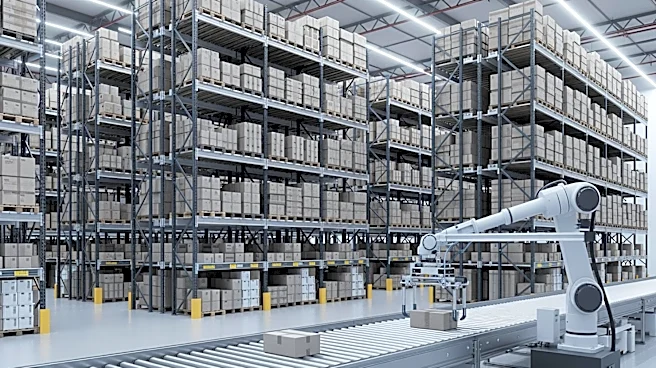
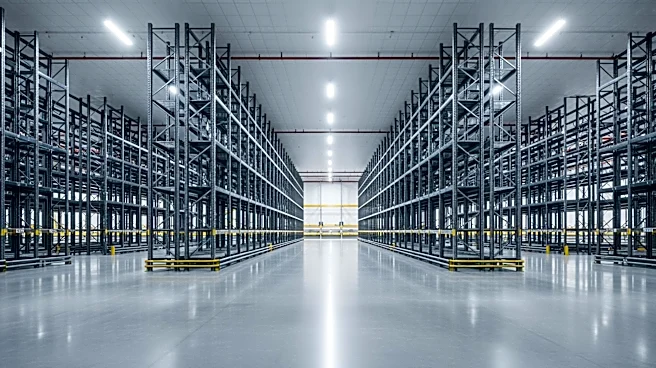
for many operating costs. This model provides planning security and eliminates the complexities associated with shared spaces. The warehouses are strategically located near interstate junctions or rail links, featuring high clear heights and standardized dock layouts. This setup is tailored to optimize truck flows and storage density, making operations predictable and efficient.
Why It's Important?
The single-tenant warehouse model is significant for the logistics industry as it offers a streamlined approach to warehouse management. By focusing on single tenants, LXP Industrial Trust can provide tailored solutions that enhance operational efficiency and reduce costs. This model supports the logistics sector by ensuring reliable and predictable cash flows for the REIT, as long as tenants remain strong. It also highlights the importance of modern infrastructure in reducing operating costs compared to older facilities. The model's success could influence other industrial REITs to adopt similar strategies, impacting the broader logistics and real estate markets.
What's Next?
As LXP Industrial Trust continues to expand its portfolio, the focus will likely remain on acquiring and developing single-tenant warehouses in key logistics hubs across North America. The company may explore opportunities to enhance the flexibility of these leases to accommodate tenant needs for expansion or reconfiguration. Additionally, the REIT will need to address challenges related to tenant turnover and the specific nature of these properties, which can lead to downtime and re-tenanting costs. Stakeholders will be watching how LXP manages these aspects to maintain its dividend-paying ambitions.
Beyond the Headlines
The single-tenant warehouse model raises questions about the balance between efficiency and flexibility in logistics operations. While it offers streamlined processes, the lack of flexibility in long-term leases could be a drawback for tenants needing to adapt quickly to changing market conditions. This model also underscores the importance of strategic location and infrastructure in logistics, which can significantly impact operational costs and efficiency. As the logistics industry evolves, the demand for such purpose-built facilities may increase, prompting discussions on sustainable and adaptable warehouse designs.