


What's Happening?
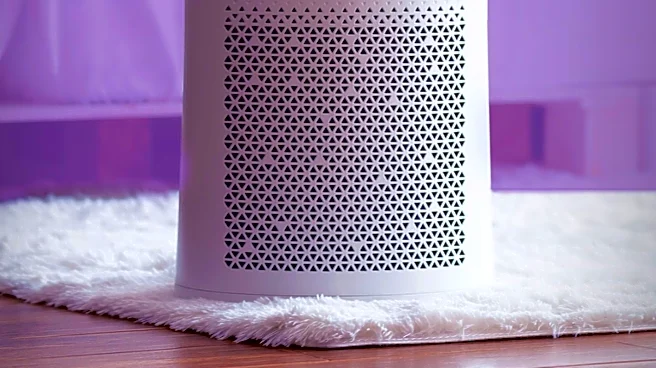
Dyson's Big+Quiet Formaldehyde air purifier, priced at approximately $900, is positioned as a premium offering in the U.S. market. This model, the BP03, distinguishes itself with advanced features such as a formaldehyde-destruction system, extended filter
intervals, and a unique airflow design capable of projecting purified air over 32 feet. It is engineered to capture 99.97% of fine particles as small as 0.3 microns. The device also includes app and remote control functionalities. Dyson recommends replacing the HEPA filter after up to five years and the carbon filter after about two years, depending on usage and sensor alerts. This product targets consumers willing to invest substantially more for additional features and advanced technology in air purification.
Why It's Important?
The introduction of high-end air purifiers like Dyson's Big+Quiet Formaldehyde impacts the U.S. consumer electronics market by setting a new benchmark for premium features and pricing. This product caters to a segment of consumers prioritizing advanced air quality solutions, potentially influencing competitors to innovate or differentiate their offerings. The emphasis on formaldehyde destruction addresses a specific health concern, which could drive demand among health-conscious buyers. Furthermore, the long filter replacement intervals, while contributing to a higher initial cost, could offer long-term convenience and potentially lower maintenance costs compared to models requiring more frequent filter changes. This trend highlights a growing market for specialized home-tech solutions that go beyond basic functionality.
What's Next?
The market will likely observe how consumers respond to the high price point and specialized features of the Dyson Big+Quiet Formaldehyde. Competitors may introduce their own advanced air purification systems to challenge Dyson's position in the premium segment. The long-term cost-effectiveness, considering the expensive replacement filters (HEPA replacement listed at $169.99), will be a key factor for consumer adoption. Continued independent testing and reviews will further evaluate its performance against other high-end and more affordable models. The success of such premium devices could also encourage further research and development into advanced air purification technologies, potentially leading to more accessible versions of these features in the future.
Beyond the Headlines
The emergence of highly specialized and expensive air purifiers like the Dyson Big+Quiet Formaldehyde reflects a broader societal trend towards increased awareness and concern about indoor air quality. This product taps into a growing demand for sophisticated home health technologies, moving beyond basic filtration to address specific pollutants like formaldehyde. It also underscores the willingness of a segment of consumers to invest significantly in products that promise enhanced well-being and advanced technological solutions. This trend could lead to a redefinition of what constitutes a 'standard' air purifier, pushing manufacturers to integrate more comprehensive sensing and purification capabilities into their devices, and potentially influencing public health recommendations regarding indoor air quality management.