




What's Happening?
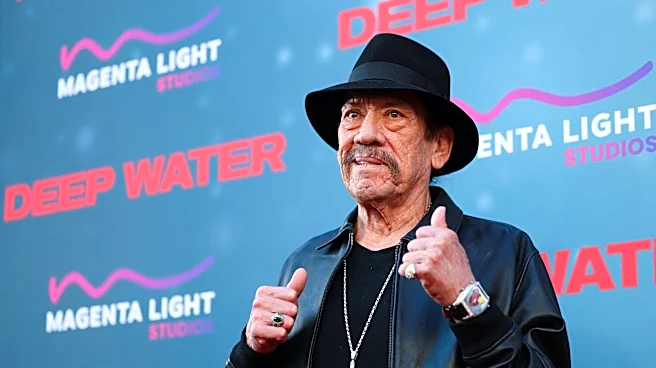
Danny Trejo's son, Gilbert Trejo, asserts that his father was unaware of Ben Shapiro's or The Daily Wire's involvement in the film 'Pawn Shop' until weeks into production. According to Gilbert, Danny Trejo accepted the role of a Mexican American pawn
shop owner, believing it to be an action movie where he played a 'good guy' trying to maintain peace amidst protests. Trejo's agent, Gloria Hinojosa, confirmed to IndieWire that Trejo was not familiar with Shapiro or The Daily Wire prior to his involvement. The film, which has been described as pro-ICE, has generated controversy, leading to protests and questions regarding Trejo's participation, given his public support for immigrants. Danny Trejo himself has stated on social media, 'I am a proud Mexican who has always been and always will be a supporter of my community. I am also obviously, pro immigrant. I am not pro ice.' Gilbert Trejo also indicated that his father is contractually bound and cannot publicly criticize the film or its producers without facing potential litigation.
Why It's Important?
This situation highlights the complexities and potential ethical dilemmas faced by actors in the film industry, particularly when production details or political affiliations of producers are not fully disclosed upfront. For Danny Trejo, a beloved actor known for his community work and pro-immigrant stance, involvement in a film perceived as pro-ICE could significantly damage his public image and alienate his fanbase. This incident also underscores the growing intersection of entertainment and political commentary, as media companies with distinct ideological leanings, like Ben Shapiro's The Daily Wire, venture into film production. The controversy could influence how actors and their representatives vet projects in the future, potentially leading to more stringent inquiries about all parties involved in a production. Furthermore, it raises questions about artistic integrity versus contractual obligations, especially for working actors who may not have the financial leverage to walk away from projects, as suggested by Gilbert Trejo regarding his father's financial situation.
What's Next?
The film 'Pawn Shop' is slated for a 2027 release, and its premiere is likely to reignite public discussion and potential protests, especially given the ongoing controversy surrounding its pro-ICE narrative and the involvement of The Daily Wire. Danny Trejo's contractual limitations mean he may continue to be unable to fully address the situation publicly, leaving his son, Gilbert, to act as his spokesperson. This could lead to continued scrutiny of the film's messaging and the production practices of The Daily Wire. The incident may also prompt industry unions, such as SAG-AFTRA, to review or reinforce guidelines regarding transparency in film contracts, particularly concerning the political affiliations of production companies and the potential for script changes that alter a film's core message. The public's reaction to the film upon its release will be a key indicator of how this controversy impacts its reception and the careers of those involved.
Beyond the Headlines
The controversy surrounding Danny Trejo's involvement in 'Pawn Shop' delves into deeper issues concerning artistic freedom, economic pressures on working actors, and the weaponization of media for political agendas. Gilbert Trejo's comments about his father viewing Hollywood as a 'factory' where 'people are not turning down work' shed light on the economic realities that can compel actors to accept roles without full knowledge of a project's broader implications. This situation also exposes a generational and technological gap, with Danny Trejo reportedly being unaware of Ben Shapiro's public profile, highlighting how different demographics consume and understand media. The incident could contribute to a broader conversation within the entertainment industry about the ethical responsibilities of producers and the need for greater transparency, especially when projects carry significant political or social undertones. It also underscores the challenge for public figures to navigate an increasingly polarized media landscape where their professional choices can be instantly scrutinized and politicized.