




What's Happening?
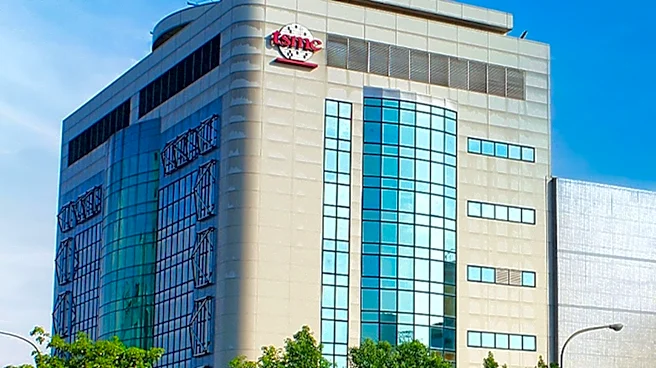
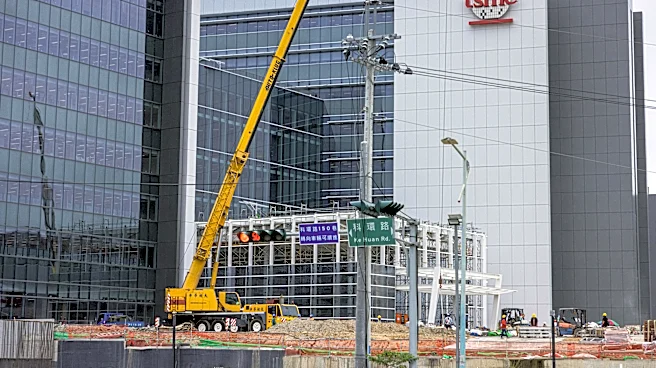
Taiwan Semiconductor Manufacturing Co. (TSMC), a major international semiconductor manufacturer, is exploring the construction of a new $22 billion factory in an East Texas county. This potential expansion is contingent upon the company receiving property
tax incentives through Texas's Jobs, Energy, Technology and Innovation program. TSMC has submitted a filing to the Texas Comptroller of Public Accounts outlining these plans. The company's representatives have indicated that if the tax incentive application is not approved, TSMC may instead opt to acquire additional land in Arizona for further expansion. TSMC has already established a significant presence in Arizona, having broken ground on three fabrication plants in Phoenix since 2020, with plans for more. An unnamed TSMC spokesperson confirmed that a Texas investment is under consideration, and applicants for the property tax program are required to demonstrate that alternative sites are being evaluated. The proposed Texas facility aims to create over 2,000 permanent jobs and involves a multi-billion dollar investment, significantly exceeding the program's minimum requirements for Brazos County.
Why It's Important?
This development is significant for the U.S. semiconductor industry and national economic policy, particularly in the context of efforts to bolster domestic chip manufacturing. The potential $22 billion investment by TSMC in Texas, or further expansion in Arizona, underscores the ongoing push to reduce reliance on overseas semiconductor production, a critical component of national security and economic resilience. The competition between Texas and Arizona for this investment highlights the role of state-level incentives in attracting high-tech manufacturing. For Texas, securing this plant would mean a substantial influx of capital and the creation of thousands of high-paying jobs, further solidifying its position as a hub for advanced industries. For Arizona, while it currently hosts TSMC's primary U.S. operations, the potential shift of future expansion to Texas could impact its long-term growth in the semiconductor sector. The decision will also influence the broader supply chain for critical technologies, potentially leading to more resilient and localized production of essential components.
What's Next?
The immediate next step involves the review and decision on TSMC's application for property tax incentives through Texas's Jobs, Energy, Technology and Innovation program. The outcome of this application will be a critical factor in determining the location of TSMC's next major U.S. expansion. If the Texas incentives are approved, TSMC is likely to proceed with its plans for the $22 billion factory in East Texas. Conversely, if the application is denied, TSMC has indicated it would consider purchasing additional land in Arizona for further expansion, leveraging its existing infrastructure and relationships there. Stakeholders, including state economic development agencies in both Texas and Arizona, will be closely monitoring this decision. The semiconductor industry, U.S. policymakers, and local communities in both states will be awaiting TSMC's final determination, which will shape the landscape of domestic chip manufacturing for years to come.
Beyond the Headlines
The competition between Texas and Arizona for TSMC's investment reflects a broader trend of states actively vying for high-tech manufacturing facilities, often through significant incentive packages. This raises questions about the long-term sustainability and economic efficiency of such incentive-driven development, and whether these benefits truly outweigh the costs to taxpayers. Furthermore, TSMC's strategic decision-making, balancing existing operational advantages in Arizona with potential new incentives in Texas, highlights the complex calculus involved in large-scale industrial investments. This situation also underscores the critical importance of a robust domestic semiconductor supply chain, a lesson reinforced by recent global disruptions. The ethical implications of states offering substantial tax breaks to attract corporations, and the potential for a 'race to the bottom' in terms of incentives, are also part of the deeper conversation surrounding such developments. Ultimately, the chosen location will not only impact local economies but also contribute to the evolving geopolitical landscape of technology production.