

What's Happening?
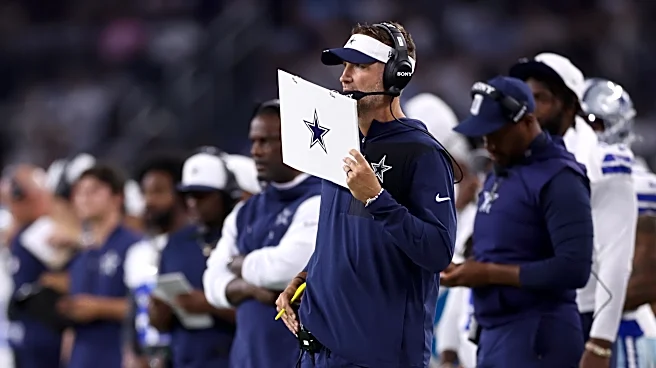
The Dallas Cowboys are facing significant challenges in their 2026 season, marked by a 3-5 record and increased scrutiny on head coach Brian Schottenheimer. A key concern is the drastic reduction in pre-snap motion, a tactic that previously created favorable
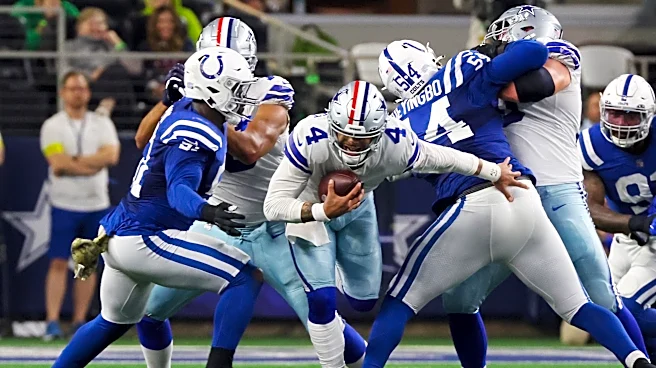
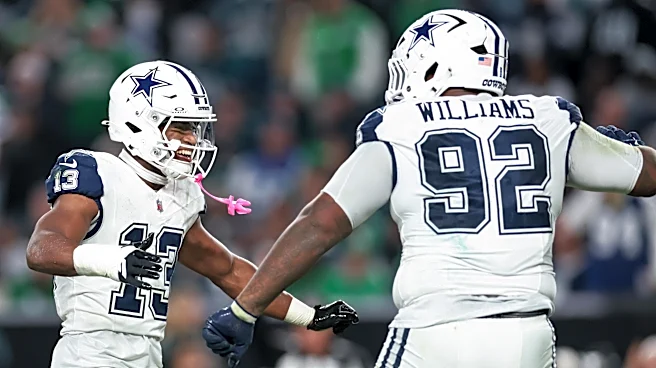
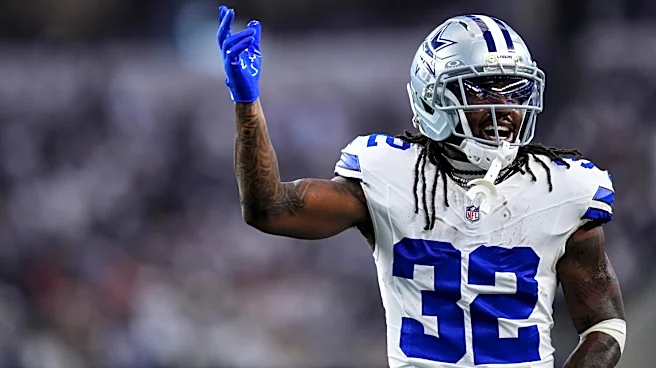
matchups for the offense. According to Cowboys Wire, the team's ranking in pre-snap motion has plummeted from 14th in 2025 to 30th in 2026, and motion at the snap from 17th to 32nd. This decline is occurring despite largely retaining offensive personnel. Schottenheimer has attributed this shift to playing from behind, but data indicates the trend persists even when the Cowboys are leading. Furthermore, the rushing attack, centered around Javonte Williams, has seen a decline in efficiency. While Williams is on pace for over 1,100 rushing yards and 17 touchdowns, his average yards per carry have decreased by nearly a yard compared to last season. The offensive line's run-block win rate has also fallen to 31st in the league, hindering Williams' ability to find consistent running lanes. The team's inability to string together victories, with only one winning streak in Schottenheimer's 25 games as head coach, further highlights the inconsistency.
Why It's Important?
The Cowboys' current struggles have significant implications for the team's immediate future and the coaching staff's stability. The decline in offensive creativity, particularly the reduced use of pre-snap motion, suggests a strategic regression that is making the offense more predictable and less effective. This directly impacts player performance and the team's ability to compete in a highly competitive league. The decreased efficiency of Javonte Williams, a central figure in the ground game, coupled with the offensive line's struggles, points to fundamental issues in offensive execution and scheme. For fans and stakeholders, the team's inconsistent performance and inability to secure consecutive wins raise questions about the overall direction of the franchise under Schottenheimer. While owner Jerry Jones has indicated no in-season coaching change, continued struggles could lead to significant personnel decisions at the end of the season, impacting the team's long-term trajectory and financial investments in players and coaching staff.
What's Next?
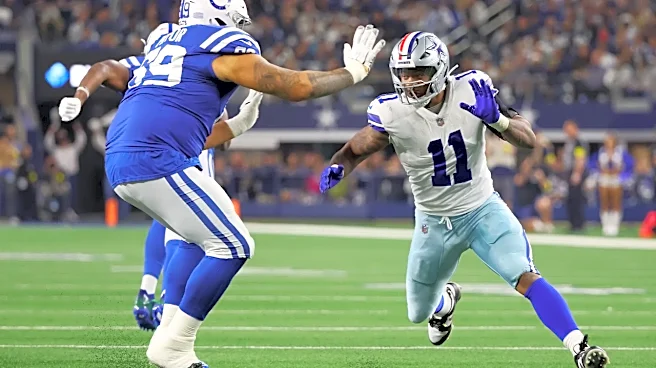
The Dallas Cowboys face a critical Week 9 matchup against the Indianapolis Colts, which could be a pivotal game for the team's season trajectory and head coach Brian Schottenheimer's tenure. A strong performance, particularly in re-establishing the running game and offensive creativity, could alleviate some immediate pressure. Conversely, another loss or a continued display of offensive inefficiency would intensify calls for significant changes. The coaching staff will likely face increased pressure to adapt their offensive scheme, potentially reintroducing more pre-snap motion or adjusting play-calling to better utilize their personnel. Javonte Williams' performance will be closely watched, as a rebound in his efficiency could signal a positive shift for the ground game. The team's ability to address its offensive line issues and create more consistent running lanes will also be crucial. While an in-season coaching change appears unlikely, the team's performance in the coming weeks will heavily influence the long-term decisions regarding the coaching staff and offensive strategy.
Beyond the Headlines
The Cowboys' current predicament extends beyond mere on-field performance, touching upon broader organizational philosophy and the pressure associated with a high-profile NFL franchise. The apparent shift away from successful offensive strategies, such as pre-snap motion, raises questions about coaching adaptability and the willingness to evolve. This situation highlights the constant tension between established coaching philosophies and the need for innovation in professional sports. The decline in the running game's efficiency, despite a talented running back like Javonte Williams, could indicate deeper issues within the offensive line's development or the overall scheme's suitability. Ethically, the pressure on coaches to deliver results in a short timeframe can lead to conservative play-calling or a reluctance to deviate from established plans, even when they are not yielding success. Culturally, the Cowboys' struggles resonate deeply with their passionate fanbase, creating a narrative of unfulfilled potential that can impact team morale, fan engagement, and ultimately, the franchise's brand value. The long-term implications could include a re-evaluation of player development strategies, coaching recruitment, and the overall strategic direction of the team.