





What's Happening?
As of November 5, 2026, the most competitive Certificate of Deposit (CD) rates in the U.S. are offering yields up to 5.05% Annual Percentage Yield (APY). This follows a period where the Federal Reserve's monetary policy has significantly influenced these
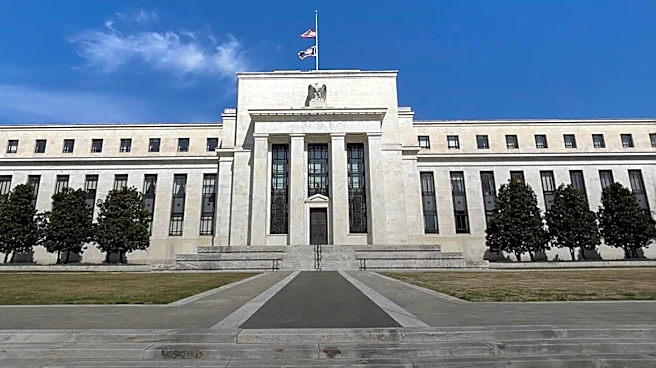
rates. In 2025, the Fed implemented three cuts to the federal funds rate, leading many financial institutions to reduce their CD and savings rates. However, a subsequent hike in the benchmark rate by the central bank in September 2026 has caused some CD rates to increase. Locking in a CD now is being suggested as a strategic move to hedge against future economic uncertainties. The highest rates are currently found in 4-year and 5-year CDs offered by institutions like Morgan Stanley, with online banks often providing superior yields due to lower operational costs compared to traditional brick-and-mortar banks.
Why It's Important?
The fluctuation in CD rates directly impacts U.S. consumers and their savings strategies. Higher CD rates offer an attractive opportunity for individuals to secure guaranteed returns on their savings, especially in an environment of economic uncertainty. This is particularly relevant for those looking for low-risk investment options. The Federal Reserve's decisions on the federal funds rate, which is the overnight lending rate between banks, serve as a benchmark that influences interest rates across the financial sector, including CDs. For financial institutions, competitive CD rates are crucial for attracting deposits, which are a primary source of funding for their lending activities. The current landscape encourages consumers to shop around for the best rates, potentially shifting deposits towards online-only banks that can offer more favorable terms.
What's Next?
The Federal Open Market Committee (FOMC) is scheduled to meet again on December 8-9, and their decisions regarding the federal funds rate will continue to shape the trajectory of CD rates. Consumers considering CDs should evaluate their financial timelines and goals, as withdrawing funds before maturity typically incurs penalties. While longer-duration CDs can shield investors from future rate decreases, the current market sometimes sees stronger APYs on medium-term CDs. The ongoing influence of the Federal Reserve's policy on interest rates means that the landscape for savings products like CDs and high-yield savings accounts will remain dynamic, requiring savers to stay informed about market changes to optimize their returns.
Beyond the Headlines
The interplay between Federal Reserve policy and consumer savings products like CDs highlights a broader economic principle: the central bank's efforts to manage inflation and stimulate economic growth directly affect the financial well-being of everyday Americans. While high CD rates are beneficial for savers, they also reflect the Fed's response to inflationary pressures or economic conditions. The historical context of CD yields, which reached double digits in the 1980s and then declined significantly before rebounding in the 2020s, illustrates the cyclical nature of interest rates. This historical perspective underscores the importance of understanding macroeconomic trends when making personal finance decisions, as current rates are a snapshot within a larger economic cycle.