



What's Happening?
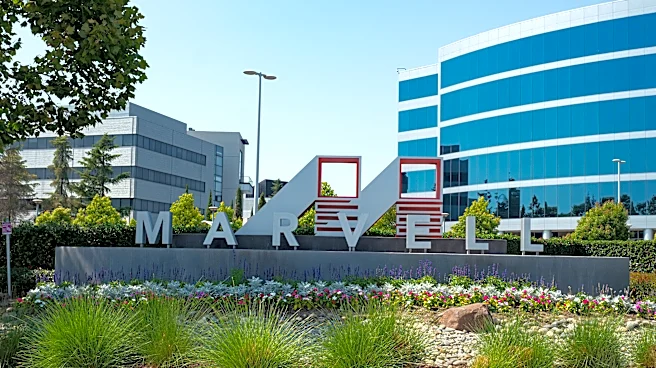
Marvell Technology, Inc. (NASDAQ: MRVL), a prominent provider of data infrastructure semiconductor solutions, has announced its participation in Supercomputing 2026 (SC26). The event, an International Conference for High-performance Computing (HPC), Networking,
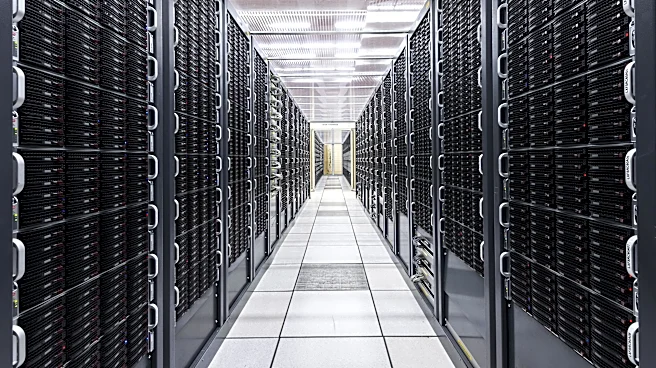
Storage, and Analysis, will take place from November 15-20 at the McCormick Place convention center in Chicago. Marvell plans to showcase its latest advancements in connectivity products designed for AI and HPC infrastructure. The company aims to address critical connectivity and memory bottlenecks that are increasingly affecting the underutilization of compute and memory-intensive infrastructure as AI and HPC workloads expand. Marvell will demonstrate technologies across scale-up, scale-out, and scale-across architectures, including its Photonic Fabric memory module, CXL memory solutions, Teralynx switching silicon, and 800G and 1.6T active electrical cables. Additionally, Preet Virk, SVP and GM of the Photonic Fabric Business Unit at Marvell, will participate in a panel discussion titled 'Photonics for AI & HPC Clusters: Breaking the Bandwidth and Power Barrier.'
Why It's Important?
Marvell's presence at Supercomputing 2026 is significant as it highlights the company's strategic focus on resolving critical infrastructure challenges within the rapidly expanding AI and HPC sectors. As AI workloads become more demanding, the bottlenecks in connectivity and memory are becoming major impediments to efficient data processing and utilization. By showcasing its advanced solutions, Marvell aims to solidify its position as a key enabler of next-generation AI infrastructure. The company's emphasis on unifying memory and interconnect as a single system, along with its innovations in CXL memory expansion and acceleration, could set new industry standards for data center efficiency and performance. Addressing these bottlenecks is crucial for hyperscale cloud providers and enterprises investing heavily in AI, as it directly impacts the scalability, speed, and cost-effectiveness of their AI operations. Success in these areas could translate into significant market share and revenue growth for Marvell, influencing the broader semiconductor and data infrastructure markets.
What's Next?
Following its demonstrations at Supercomputing 2026, Marvell will likely continue to engage with key customers and partners to integrate its new connectivity and memory solutions into their AI and HPC infrastructures. The insights gained from the conference, particularly from discussions on photonics and CXL memory, could inform future product development and strategic partnerships. The company's ability to convert these technological showcases into commercial successes will be a critical measure of its impact. Investors will be watching for updates on customer adoption, revenue contributions from these new products, and any further announcements regarding collaborations or advancements in AI infrastructure. The ongoing evolution of AI and HPC workloads will necessitate continuous innovation in semiconductor solutions, positioning Marvell to potentially capitalize on these trends if its technologies prove effective in real-world deployments.
Beyond the Headlines
Marvell's focus on addressing connectivity and memory bottlenecks in AI infrastructure points to a fundamental shift in how data centers are designed and operated. The increasing demand for AI processing is pushing the limits of traditional computing architectures, necessitating integrated solutions that can handle massive data flows and complex computations more efficiently. The emphasis on photonics and CXL memory solutions suggests a move towards more advanced optical interconnects and flexible memory architectures, which could become standard in future data centers. This development has broader implications for the entire technology ecosystem, potentially driving innovation in related fields such as data center cooling, power management, and software optimization. The long-term success of AI will depend not only on powerful processors but also on the underlying infrastructure's ability to support these processors seamlessly, making Marvell's contributions in this area pivotal for the continued advancement of AI technology.