







What's Happening?
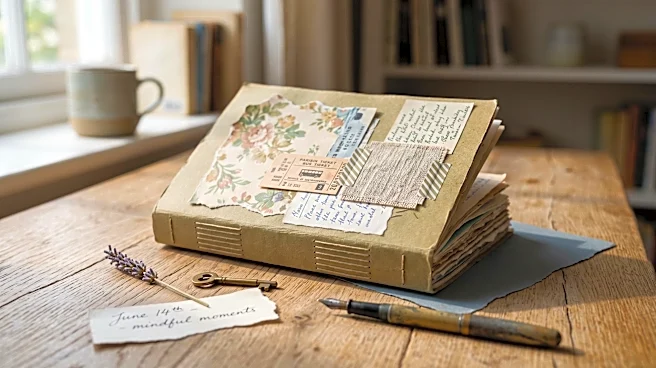
Junk journaling is being highlighted as an accessible and less formal alternative to traditional journaling, particularly for practicing gratitude. Unlike conventional journaling, which often requires dedicated quiet time and extensive writing, junk journaling embraces
imperfection and utilizes everyday ephemera such as receipts, ticket stubs, magazine clippings, and packaging. This method encourages individuals to collect and incorporate items that would typically be discarded, transforming them into a personal record of daily life and moments of gratitude. The practice is presented as a way to document experiences without the pressure of perfect prose or consistent entries, making it manageable for those who have struggled with traditional journaling. The article suggests that even a quick note scribbled on a grocery list can be a valid entry, emphasizing mindfulness in collecting and reflecting on small, everyday joys.
Why It's Important?
This approach to journaling is significant because it lowers the barrier to entry for practicing gratitude, a habit linked to increased mindfulness and improved mood. Many individuals find traditional journaling daunting due to time constraints or the perceived need for eloquent writing. Junk journaling offers a flexible, creative outlet that fits into busy lifestyles, making the benefits of reflection more attainable. By focusing on tangible items from daily life, it encourages a different form of engagement with personal experiences, transforming mundane objects into meaningful memories. This method can help individuals recognize and appreciate the small, often overlooked aspects of their lives, fostering a more positive outlook and a deeper connection to their personal history. It democratizes the act of journaling, making it less about literary skill and more about personal reflection and appreciation.
What's Next?
As awareness of junk journaling grows, more individuals may adopt this practice as a simple yet effective way to cultivate gratitude and mindfulness. The accessibility of materials—everyday items that would otherwise be thrown away—makes it an economical and sustainable hobby. Social media platforms are likely to continue playing a role in popularizing junk journaling, with communities sharing ideas and inspiration for creative entries. This trend could lead to an increase in workshops or online tutorials dedicated to the craft, further expanding its reach. For those seeking to incorporate more gratitude into their lives without the pressure of formal writing, junk journaling offers a practical and enjoyable solution, potentially leading to broader adoption as a wellness practice.
Beyond the Headlines
Beyond its immediate benefits for personal well-being, junk journaling touches upon broader themes of consumerism, memory, and the value we place on everyday objects. In a society often focused on acquiring new things, junk journaling encourages a re-evaluation of what we already possess and consume, transforming 'trash' into 'treasure.' It challenges the notion that only grand events are worthy of documentation, highlighting the richness found in the mundane. This practice can also serve as a tangible counterpoint to the increasingly digital nature of our lives, offering a physical, tactile record of experiences. Ethically, it promotes a form of mindful consumption and appreciation for the ephemeral, encouraging individuals to find beauty and meaning in the transient aspects of daily existence. Culturally, it reflects a growing desire for authenticity and personal expression in an increasingly curated world.