





What's Happening?
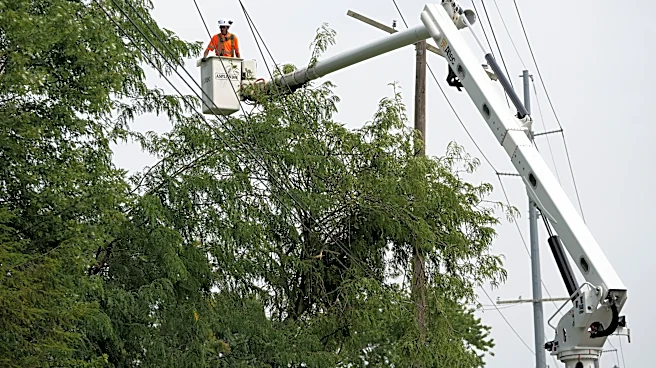
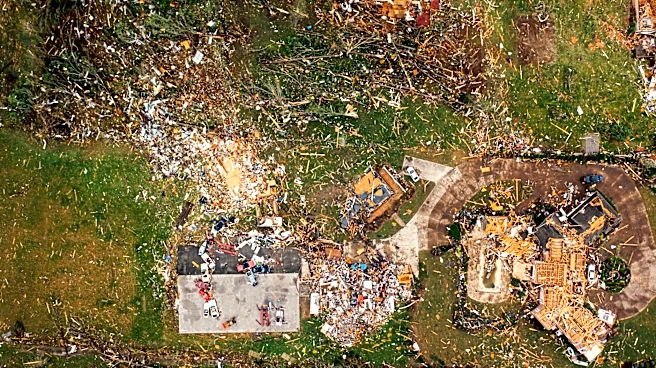
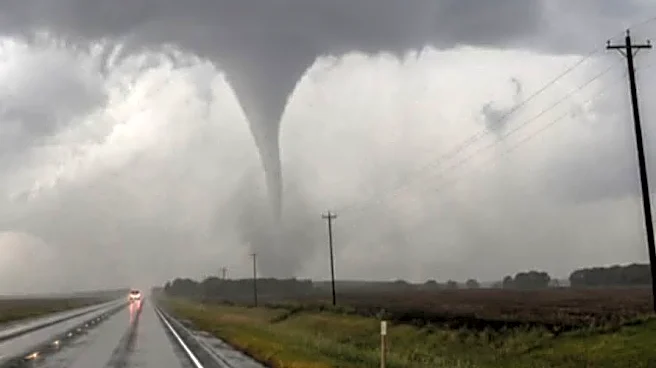
Businesses in Madeira, Ohio, are facing substantial financial setbacks due to prolonged power outages caused by a recent storm. Alison Tepe-Guy, owner of Ali's Bar and Grill, reported an estimated loss of nearly $25,000. This includes approximately $14,000
worth of refrigerated food and drinks that had to be discarded, in addition to revenue lost from being closed for multiple days. Tepe-Guy described the period as one of the most challenging times of her life, emphasizing that even a $5,000 loss is astronomical for a small business. Similarly, DeAnna Bailey-Sanchez, owner of Bailey Family Catering, also experienced power loss for several days, resulting in the spoilage of thousands of dollars worth of products. This marks the first time in over a decade of business that Bailey-Sanchez had to file an insurance claim for such losses. The power outages compounded existing challenges for these businesses, which are already contending with ongoing construction on Camargo Road, a project involving the installation of a new water main, safety features, sidewalks, and street resurfacing.
Why It's Important?
The significant financial losses experienced by small businesses in Madeira highlight the vulnerability of local economies to natural disasters and infrastructure disruptions. For businesses like Ali's Bar and Grill and Bailey Family Catering, losses ranging from thousands to tens of thousands of dollars can be catastrophic, potentially threatening their long-term viability. These incidents underscore the critical importance of resilient power infrastructure and effective disaster preparedness for small and medium-sized enterprises (SMEs). The compounding effect of the power outages with ongoing road construction further illustrates how multiple external factors can create a perfect storm of challenges for local businesses, impacting their customer traffic and operational capacity. The need for community support, as expressed by the business owners, points to the broader societal impact of such events, where the survival of local establishments often depends on the patronage of residents. This situation also brings to light the role of insurance in mitigating such risks, though the immediate operational and inventory losses can still be devastating.
What's Next?
In the immediate future, the affected businesses in Madeira will focus on recovering from their losses and rebuilding their inventory and customer base. Both Alison Tepe-Guy and DeAnna Bailey-Sanchez have emphasized that the best way for the community to help is by actively supporting their establishments. This call for local patronage suggests a period of increased community engagement and a push for residents to frequent these businesses to aid in their recovery. City officials are reportedly trying to assist local businesses and manage the impact of the ongoing construction on Camargo Road, which will continue to be a factor for these establishments. The long-term implications may include a re-evaluation of disaster preparedness strategies for small businesses in the area, potentially leading to discussions about backup power solutions or more robust insurance coverage. Furthermore, the experience could prompt local government and utility providers to assess the resilience of their infrastructure against future storm events and to better coordinate with businesses during prolonged construction projects.
Beyond the Headlines
The struggles of Madeira businesses extend beyond immediate financial losses, touching upon the broader resilience of local communities and the psychological toll on small business owners. The sentiment expressed by Alison Tepe-Guy, calling it "one of the most trying times of my life," underscores the deep personal investment and emotional burden associated with running a small business, especially when faced with unforeseen disasters. The ongoing construction on Camargo Road, described as a "big salt block in the wound," highlights the cumulative stress that multiple, seemingly unrelated challenges can place on local enterprises. This situation also brings to light the often-overlooked interdependencies within a local economy; when one sector, like infrastructure, experiences disruption, it can ripple through the entire business ecosystem. The narrative implicitly raises questions about the adequacy of support systems for small businesses during crises, including the effectiveness of local government interventions and the accessibility of relief funds or resources. Ultimately, this event serves as a microcosm of the challenges faced by small businesses nationwide when confronted with both natural disasters and urban development projects.