





What's Happening?
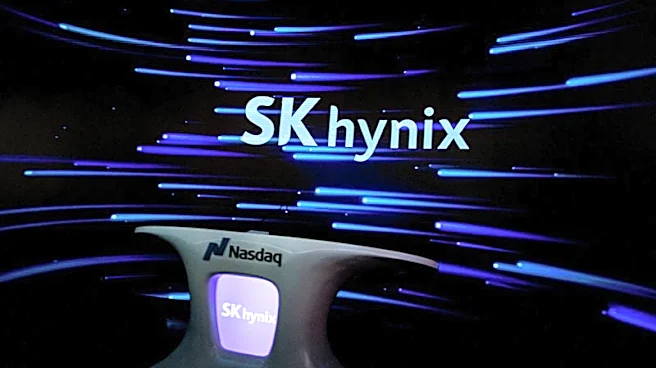
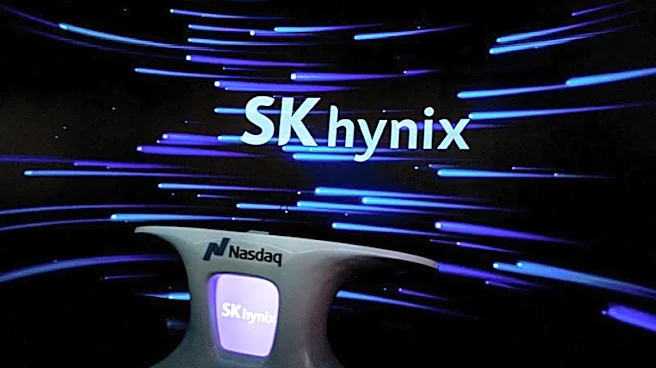
SK Hynix Inc. reported a significant increase in quarterly profit, rising by 557%, yet falling short of analysts' expectations. The company's revenue also missed projections, coming in at 79.3 trillion won against an expected 83.9 trillion won. Despite
securing multiyear contracts with around 10 customers, SK Hynix has seen a substantial decline in its market value, losing over $500 billion since June. This decline is attributed to investor concerns over the sustainability of the AI boom and the rising debt levels of tech companies. The volatility in Korea's stock market has been exacerbated by these concerns, leading to a 45% drop in SK Hynix's value within a month.
Why It's Important?
The performance of SK Hynix is a critical indicator of the health of the semiconductor industry, particularly in the context of the AI boom. The company's struggles highlight broader concerns about the sustainability of current market valuations and the potential for an economic slowdown due to rising chip costs. This situation could lead to higher electronics prices and reduced production of devices like PCs and smartphones. The outcome of SK Hynix's performance could influence investor confidence and impact the global tech market, especially as companies navigate the balance between growth and financial stability.
What's Next?
Looking ahead, SK Hynix and other chipmakers are expected to face continued scrutiny from investors regarding their financial strategies and market positioning. The company has indicated that memory chip shortages may persist beyond 2030, suggesting a potential long-term demand that could stabilize the market. However, the immediate focus will be on how SK Hynix manages its debt levels and whether it can meet investor expectations in future quarters. The broader tech industry will also be watching for any shifts in consumer demand and production strategies in response to ongoing economic pressures.